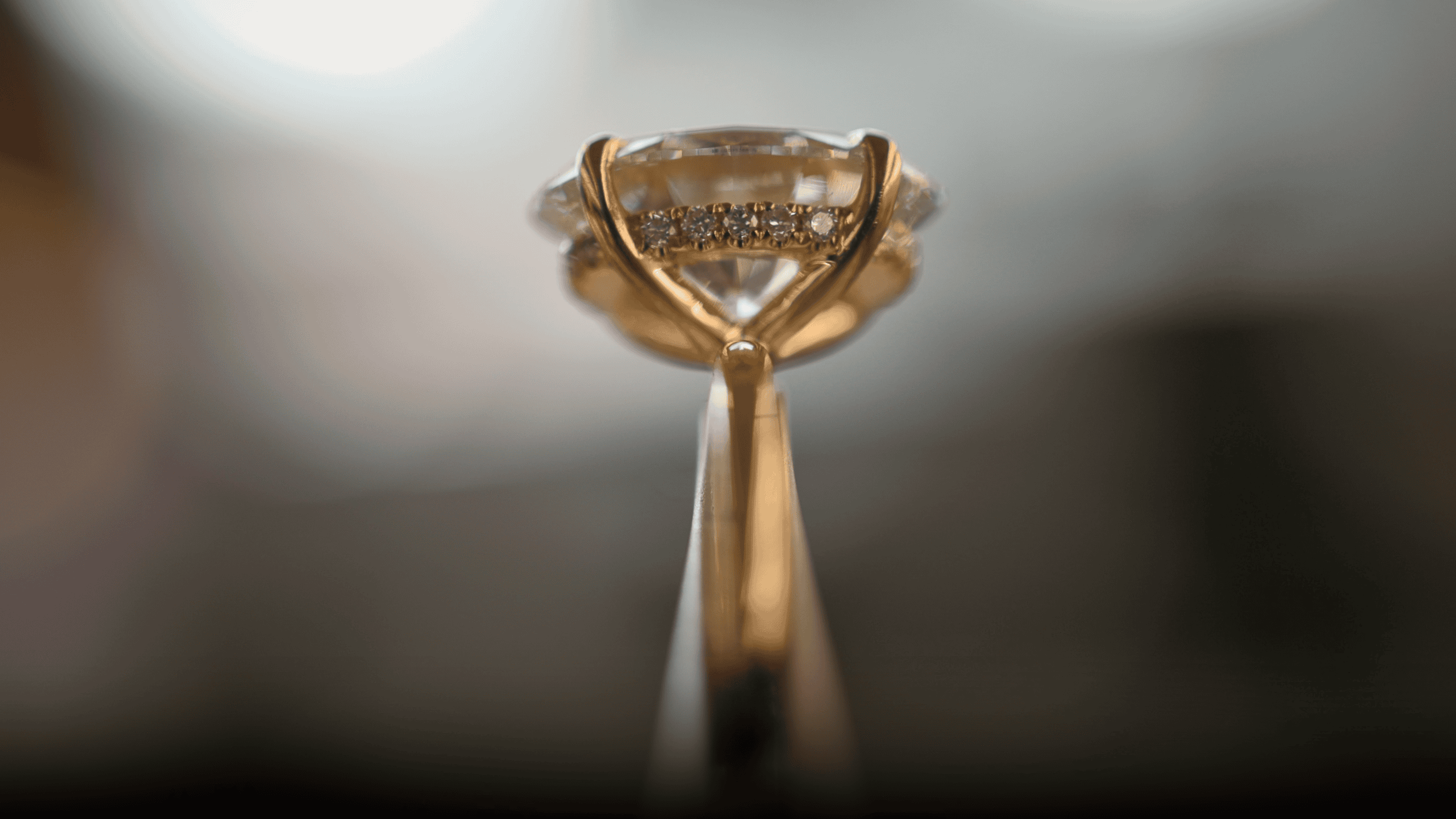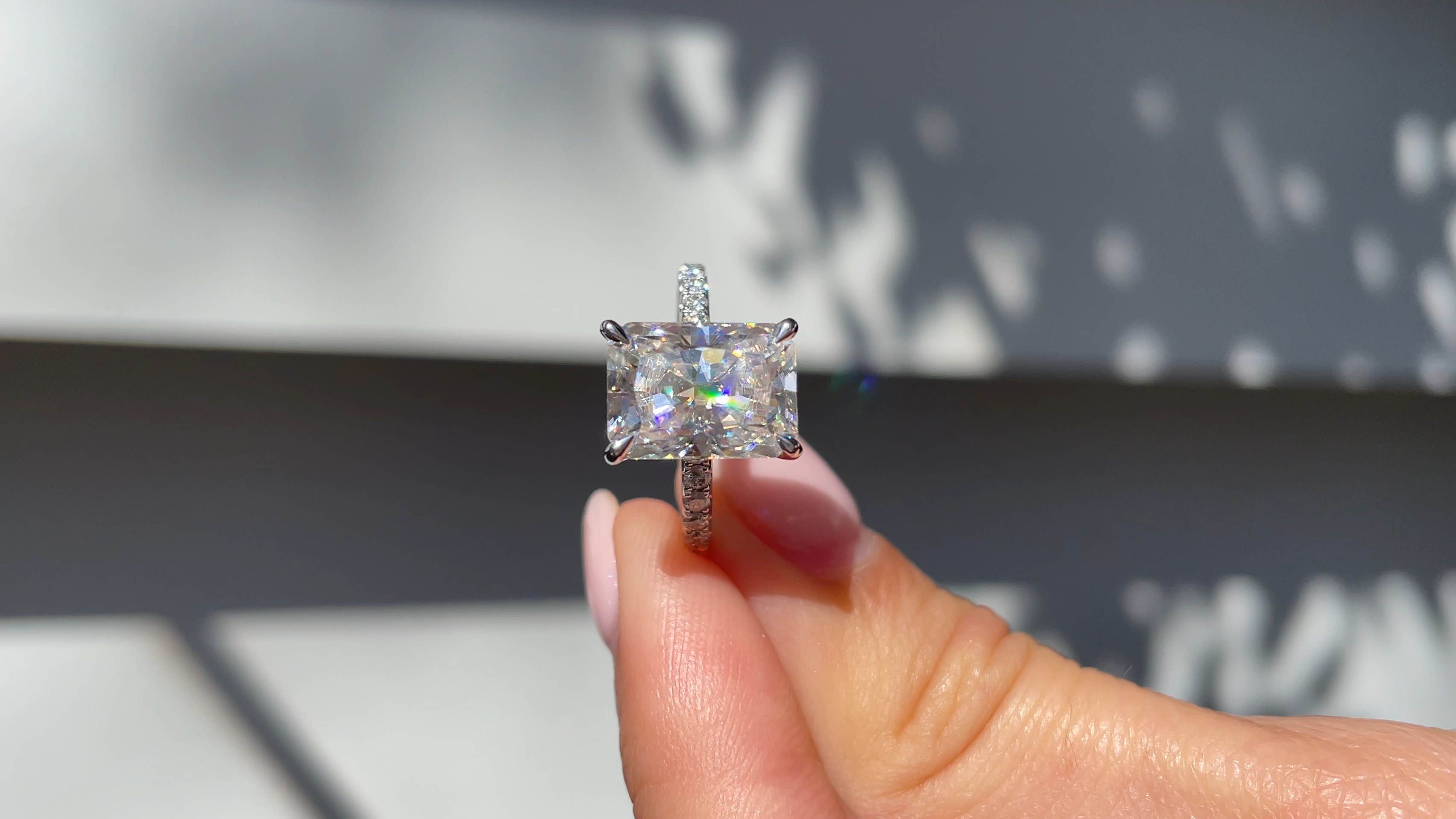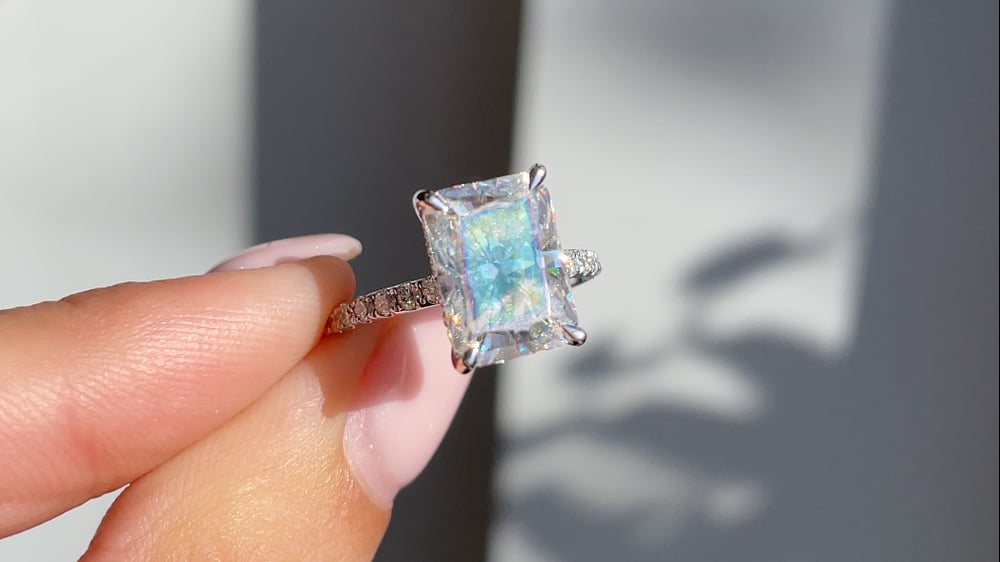
Moissanite is loved for its unique, kaleidoscope sparkle and incredible durability, but even the toughest gemstones can lose their shine when everyday life gets in the way. Products like hand soap, sanitiser, makeup, sunscreen, skincare and even natural skin oils can leave a thin, stubborn film on the surface of the stone. When that buildup starts to cling, it can create what’s known as the moissanite “oil slick”, a surface residue that can make your gemstone look cloudy, darker, or show a subtle rainbow sheen.The important thing to know is that oil slick sits on the surface of the moissanite. It does not permanently change the stone, and with the right care it can be removed so your ring looks crisp and sparkly again. Below, we break down exactly what moissanite oil slick is, what causes it, how to spot it early, and the easiest ways to remove it at home.
What is Moissanite Oil Slick?
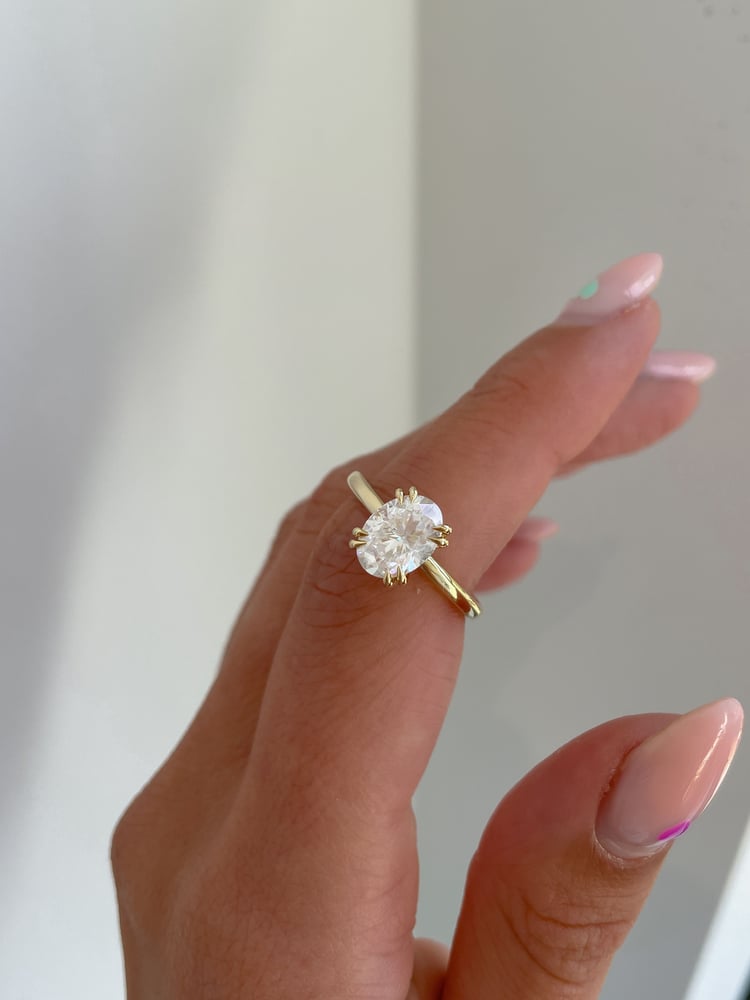
Oil slick is excess build up of oils and chemicals on the surface of the stone that can make moissanite appear cloudy or darker in colour, and this can build up from a very small amount of grease. The main offenders are household soap, hand sanitiser, make-up, skin oil, sweat, chlorine oil, fragrance oils and tanning lotion. The spot may be barely noticeable at first, but if your ring is not cleaned regularly, then layers of grease can start to look more visible over time. Much like an oil slick that you would see on the road from a petrol spill, the oil slick on a stone will make the moissanite appear rainbow in colour. When build-up is not regularly removed from any precious gemstone, it can stubbornly cling to the surface, creating a natural reaction towards the substance exposure. Oil slick on larger stones may also be more obvious than on smaller stones due to the larger surface area.
Does Oil Slick Affect Diamonds or Other Gemstones?
Oil slick reactions can occur on many different precious gemstones depending on what is exposed to, but it is less visible on diamond stones as diamonds do not absorb oil substances easily. However, residue and build up can still accumulate on diamond engagement rings and wedding bands, so they also need regular cleaning and maintenance.
How to Remove Moissanite Oil Slick at Home
At Cullen, we recommend a thorough clean for all your precious jewellery as needed or when you start to notice build up. After taking off your ring, soak it in warm water and, with a soft toothbrush, use mild dishwashing detergent to remove mild day-to-day dirt and grime. Ensure that your detergent doesn’t have aloe or vitamin E in its ingredients, as these create moisture and can make oil slick worse. Next, clean and dry your ring thoroughly before storing it away safely to ensure any remaining residue does not cling to the wet surfaces of your ring or the facets of your gorgeous stone.
Book a Complimentary Ring Cleaning Service
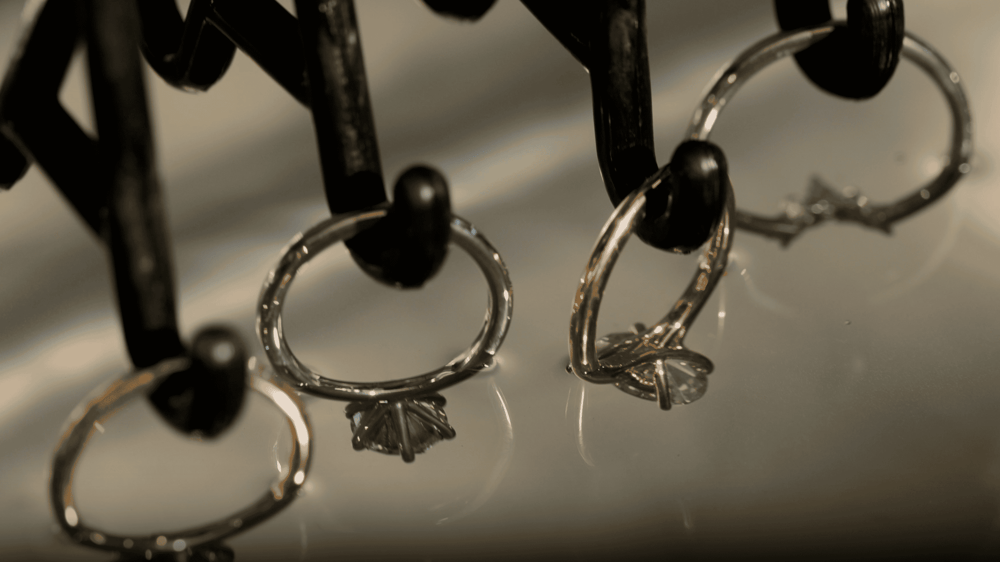
At Cullen, we offer our clients a complimentary ultrasonic clean to keep their Cullen rings sparkly; just book an appointment with us today. This can be done on the spot and usually takes around 5-10 minutes.
Discover Our Moissanite Engagement Rings
We believe in creating extraordinary client experiences while respecting tradition and artisanal skill in fine jewellery making. We are passionate about integrating cutting-edge technology with practices that benefit both people and the planet. We believe moissanite is a truly beautiful precious gemstone with great brilliance and fire. However, like any precious gemstone, moissanite requires care and maintenance to avoid buildup over time. For the proposal that can’t wait, explore our ready to ship engagement rings or create your lab grown diamond, moissanite or lab grown sapphire engagement ring with our engagement ring builder.