Green Lab-Grown Diamonds: Price, Colour and Buying Guide
— by Cullen Jewellery — Reading time 7 minutes
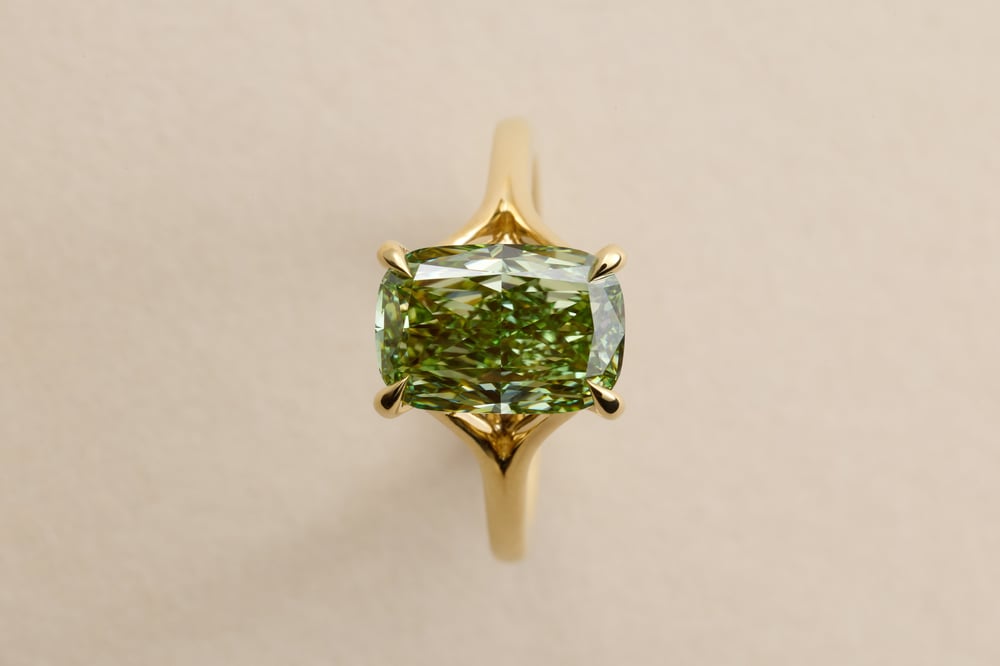
Green is one of the rarest diamond colours, and one of the most unique. Only a small number of people have been able to own one throughout history, but the advent of lab-grown diamonds has changed that by putting green stones within reach of many more buyers. Read on to see how green diamonds get their colour, what they cost, and how to choose the right one for you.
What Makes a Diamond Green?
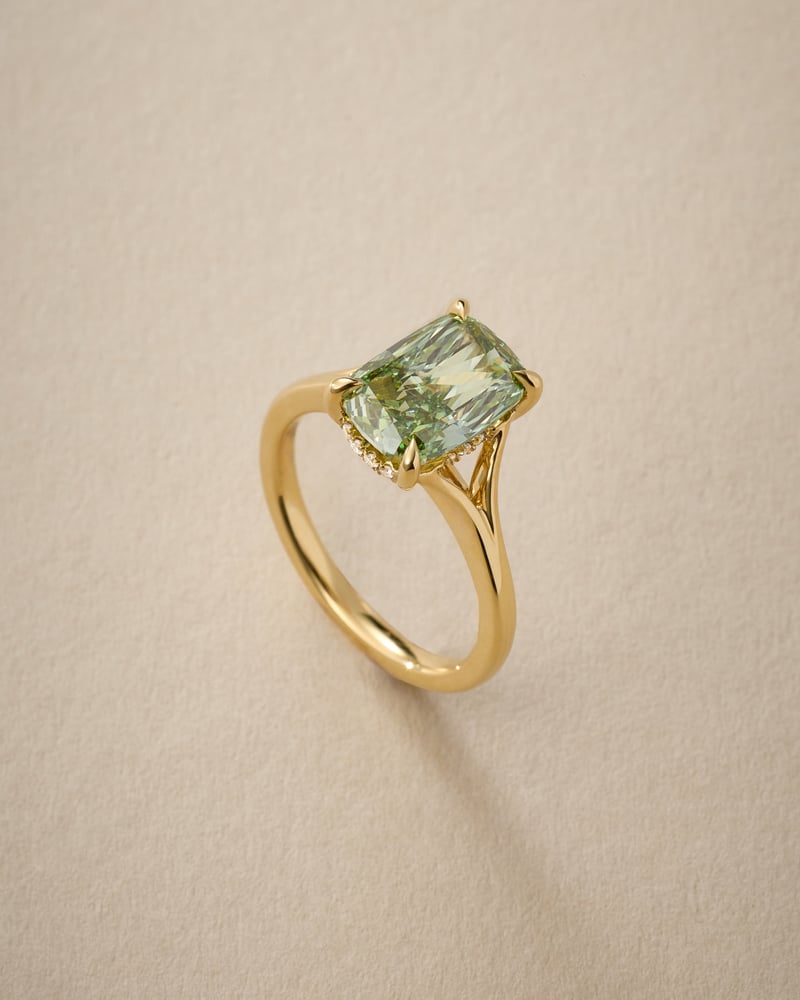
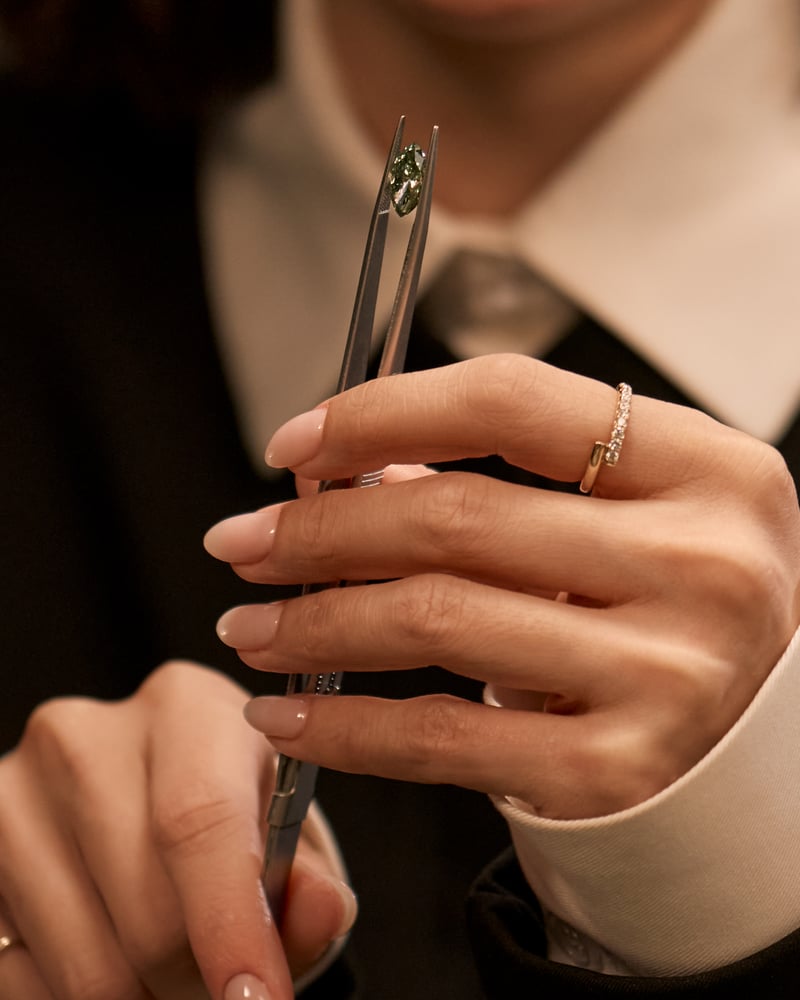
Every diamond, whether formed kilometres underground over millions of years or in a reactor over weeks, begins as a lattice of carbon atoms. Colour enters the picture when that lattice is disturbed.
In mined green diamonds, that disturbance comes from the earth. Over millions of years, radiation from minerals in the surrounding rock can subtly alter the diamond's internal structure, changing the way it absorbs light. The diamond absorbs more red light, allowing green wavelengths to dominate and giving the stone its green hue. In most mined green diamonds, this colour only reaches the outer layers of the stone, making diamonds with a rich green colour throughout exceptionally rare. A deeper, full-body green requires prolonged or stronger radiation exposure over geological time.
Lab-grown green diamonds achieve their colour through a controlled replication of the same process. First comes the growth of a colourless lab-grown diamond, then controlled irradiation in a particle accelerator or nuclear reactor creates the same changes to its internal structure that give mined green diamonds their colour. Same cause, same colour, just without the geological wait.
Some stones undergo a further stage of low-temperature heating, known as annealing, to refine their final green hue. At Cullen, we source green lab-grown diamonds that achieve their colour through post-growth irradiation, the most common method of producing green lab-grown diamonds.
How Rare is a Green Diamond?
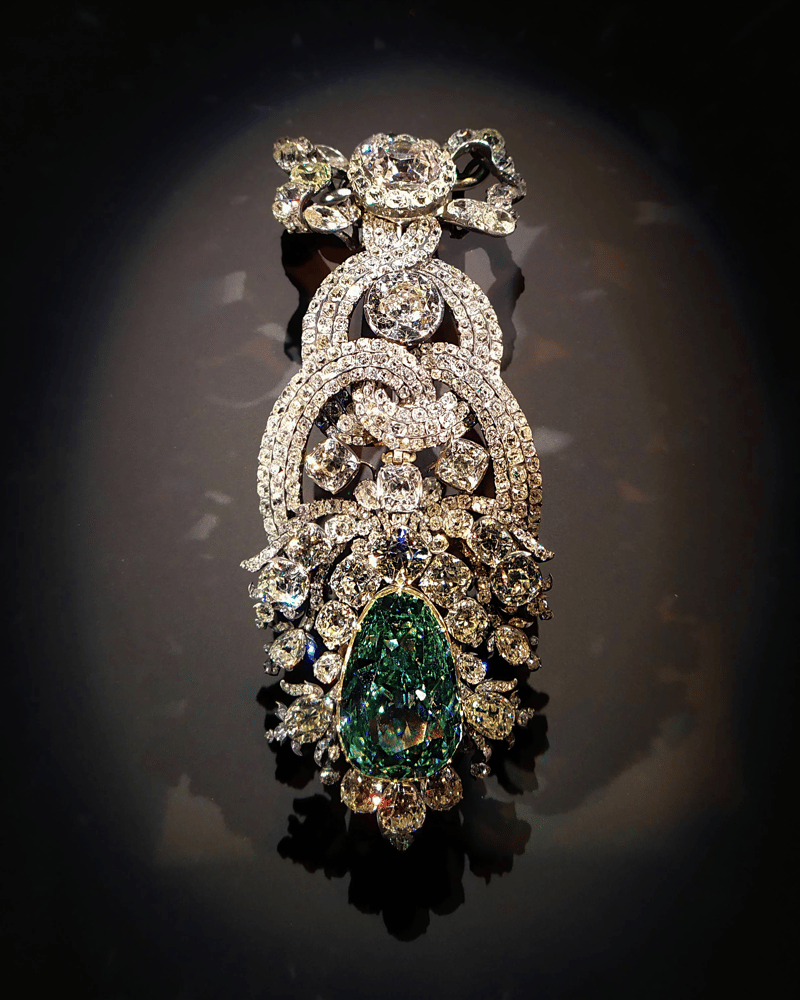
Among mined fancy-colour diamonds, green is exceptionally rare. Mined green diamonds represent less than 0.1% of all mined diamonds. Only a handful of gem-quality mined green diamonds come to market in a given year, with many of the most significant examples sitting permanently in museum collections. The 41-carat Dresden Green diamond resides in Dresden’s Green Vault and ranks among the most coveted mined green diamonds in existence, with a rich, even colour that gemologists continue to study. Mined fancy green diamonds with strong colour saturation can command hundreds of thousands of dollars per carat particularly in larger sizes. In 2016, the 5.03-carat Fancy Vivid Green Aurora Green Diamond sold for USD $16.8 million at Christie’s Hong Kong.
Green Lab-grown Diamond Vs. Mined Green Diamond Vs. Emerald
The Cullen Green Range
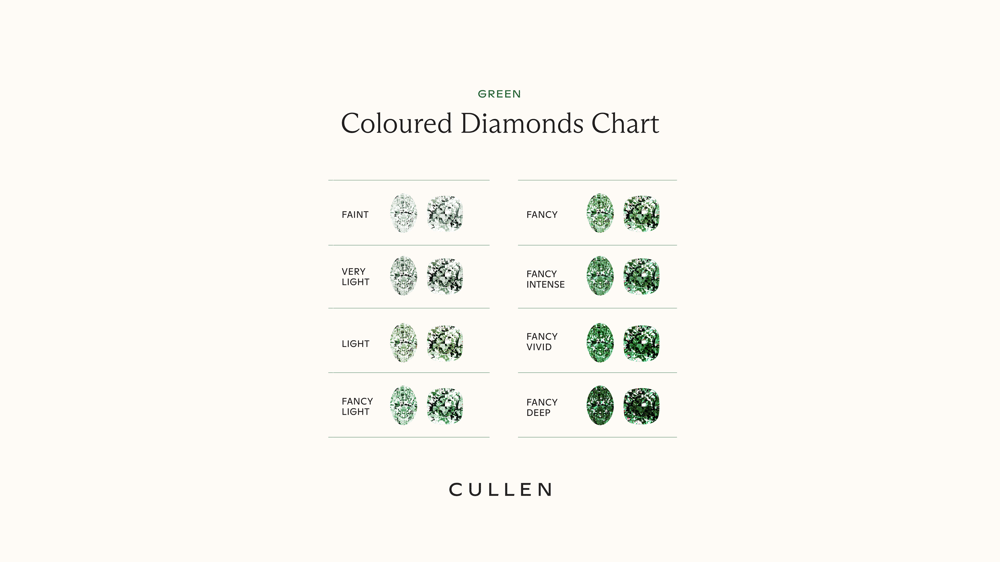
Our green lab-grown diamonds follow the standard IGI fancy-colour scale, which measures three things: hue (the dominant colour and any secondary tones), tone (how light or dark the stone appears), and saturation (how strong and pure the colour is). Together, these three qualities determine the grade.
The scale runs from most pale to most saturated. At the lighter end, a Faint or Very Light green looks almost like a tinted colourless stone.
A Fancy Light or Fancy green is where the colour becomes dependably visible. The hue is present in all lighting and unmistakably green face-up, but the tone remains airy rather than dark.
Fancy Intense greens show a strong, clear colour with good saturation. The stone holds its depth whether you are indoors under warm tungsten or outside in daylight.
Fancy Deep diamonds have a darker, richer tone.They suit a wearer who wants the stone to feel considered and distinctive rather than bright.
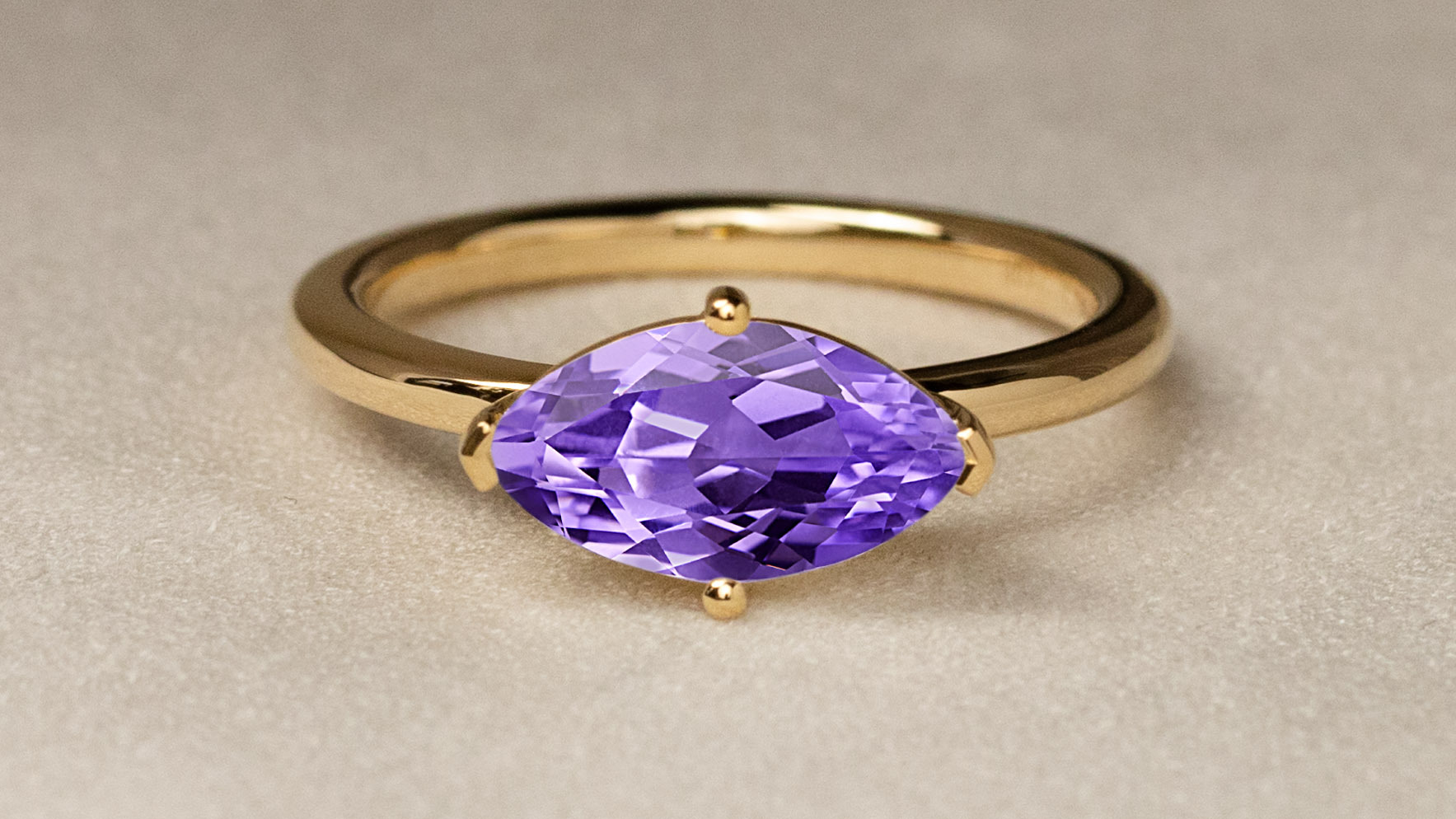
We also offer a seafoam green and clover green moissanite collection for those who want maximum colour at a lower entry price, and a wide selection of coloured sapphires for those drawn to a coloured stone but open to gemstones beyond diamonds.
Pairing Green Lab-grown Diamonds With White, Yellow and Rose Gold
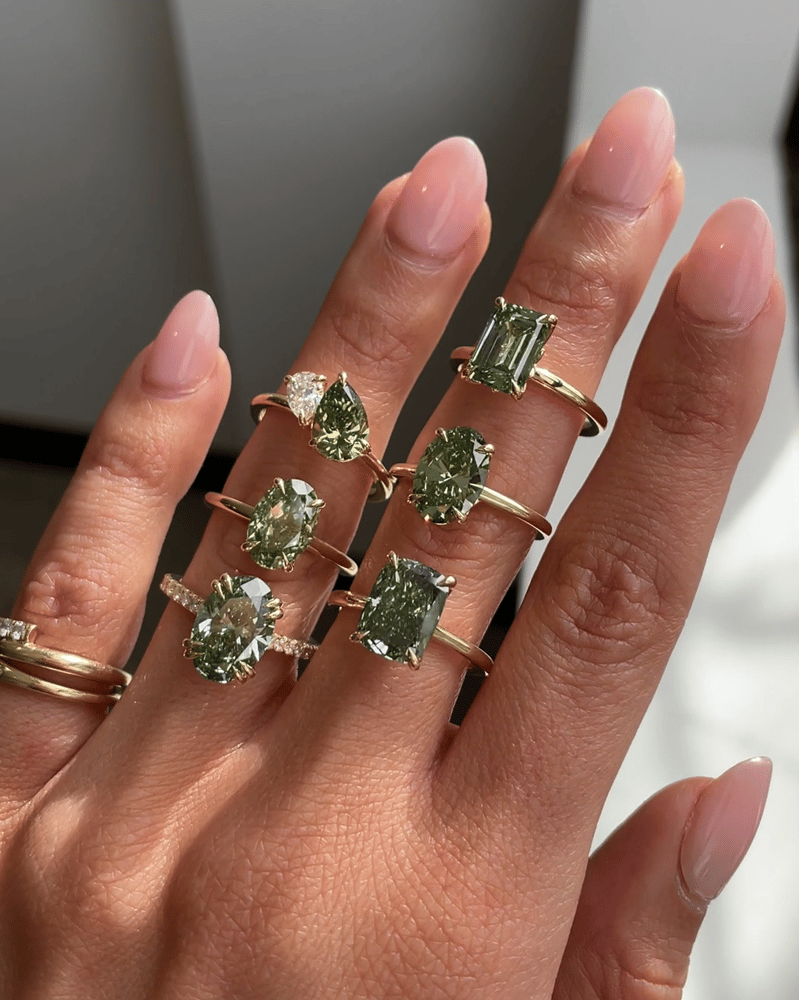
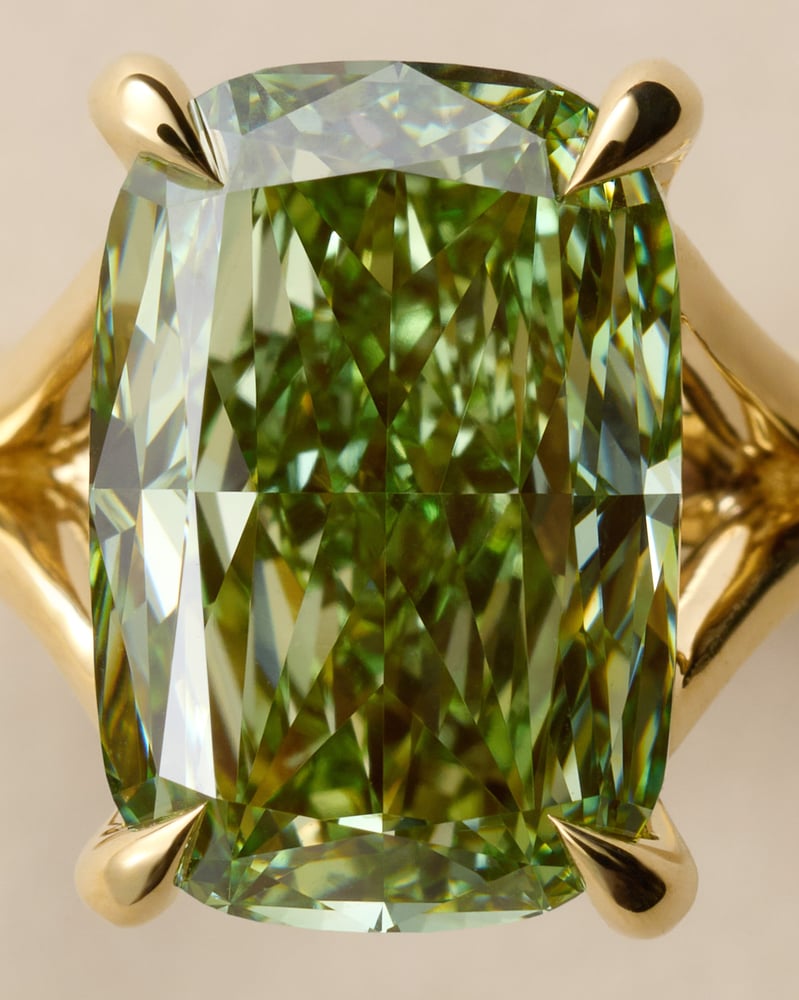
The same stone can look surprisingly different in white, yellow or rose gold. It’s worth considering this before you settle on a particular style.
White gold or platinum is the most neutral environment for a green lab-grown diamond. A white metal lets the stone’s own colour speak without commentary. A Fancy Intense green reads as fully, cleanly green, and a lighter Faint grade will show its hue against a cool background rather than being absorbed into it. If accurate colour is the priority, a white metal shows it most faithfully.
Yellow gold brings warmth to the stone. A green diamond set in yellow gold picks up a slightly warmer, more olive quality. The yellow in the metal pushes the hue toward a yellow-green that reads as earthy, rich, and vintage-adjacent. Fancy and Fancy Intense greens suit yellow gold particularly well, and lighter grades can appear slightly warmer than they would in white metal.
Rose gold introduces the most contrast of the three. The blush-pink of the metal plays directly against the green of the stone in a combination that is striking precisely because the colours are on opposite sides of the wheel. A Fancy or deeper green in rose gold has an almost jewel-box quality, ideal for maximalists.
What Green Lab-grown Diamonds Cost

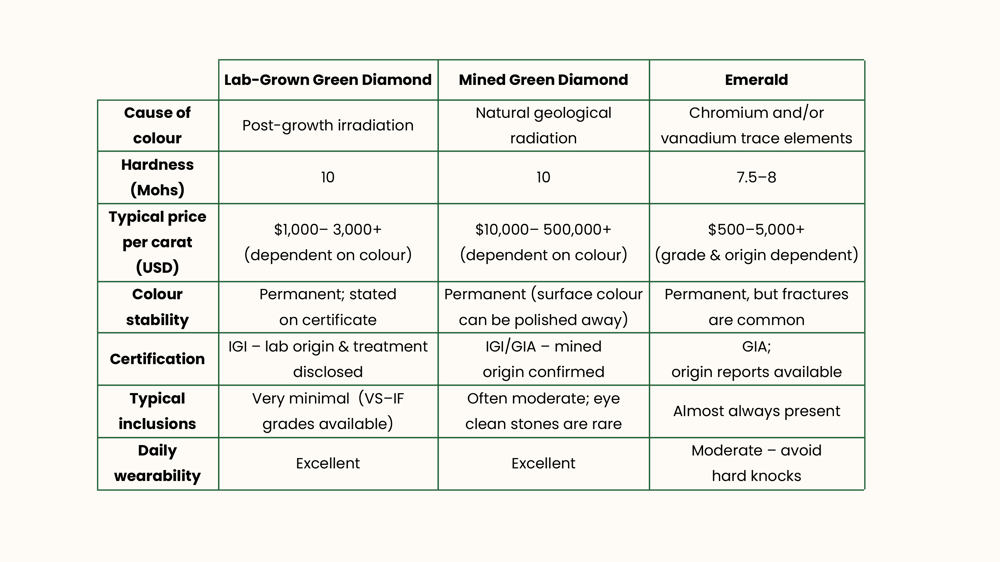
Coloured lab-grown diamonds carry a premium over colourless, because the irradiation treatment adds a production step and demand for strong-colour fancy grades is genuinely higher than supply at any given time. A green lab-grown diamond at Faint to Fancy Light grades typically carries a more modest premium over a comparable colourless stone, sitting around USD $1,000–3,000+ per carat (dependent on colour). A Fancy Intense or Fancy Vivid green carries a more significant premium, reflecting both the additional treatment process and the lower proportion of treated stones that reach that grade successfully.
Against mined green diamonds, the comparison shifts substantially. A mined Fancy green at one carat starts at tens of thousands of dollars. A mined Fancy Vivid green at the same weight may exceed hundreds of thousands. A lab-grown green at any fancy grade sits well below both figures, which is the reason the green diamond – historically a stone reserved for major collectors – has become a realistic choice for an everyday ring.
Does the Colour Last?
Post-growth irradiation treatment in a lab-grown green diamond is permanent under normal wearing conditions. The stone will not fade in sunlight, discolour with cleaning, or change hue with age. Routine ultrasonic cleaning is safe
and the treatment is fully disclosed on the IGI certificate. You’ll see a note in the “Treatment” field confirming that the colour is the result of irradiation. This is standard practice and required by IGI for all treated stones.
Ready to Design Your Ring?
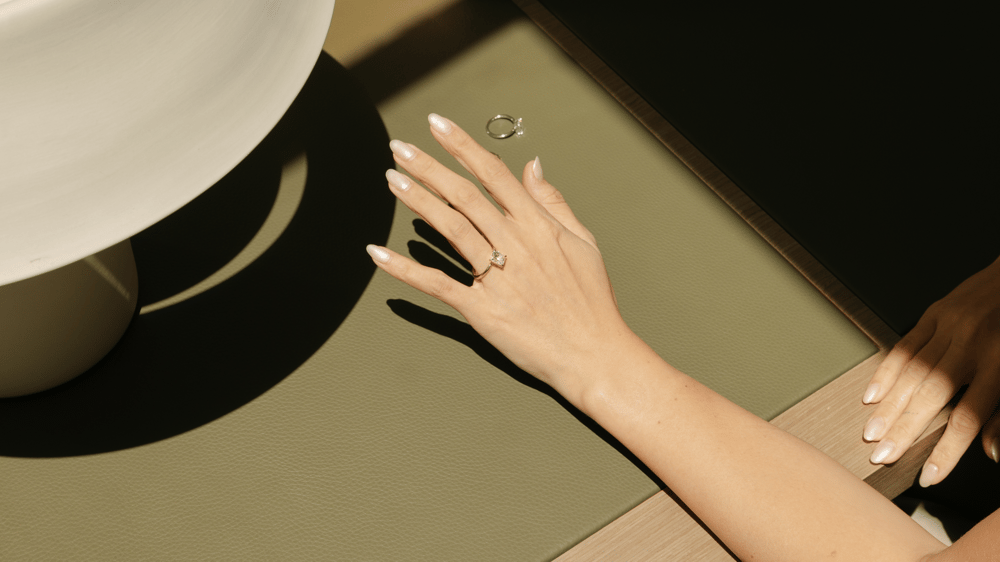
A green lab-grown diamond works in almost any setting. The Cullen team can walk you through shades, shapes, and settings in a single conversation, with no obligation to commit.
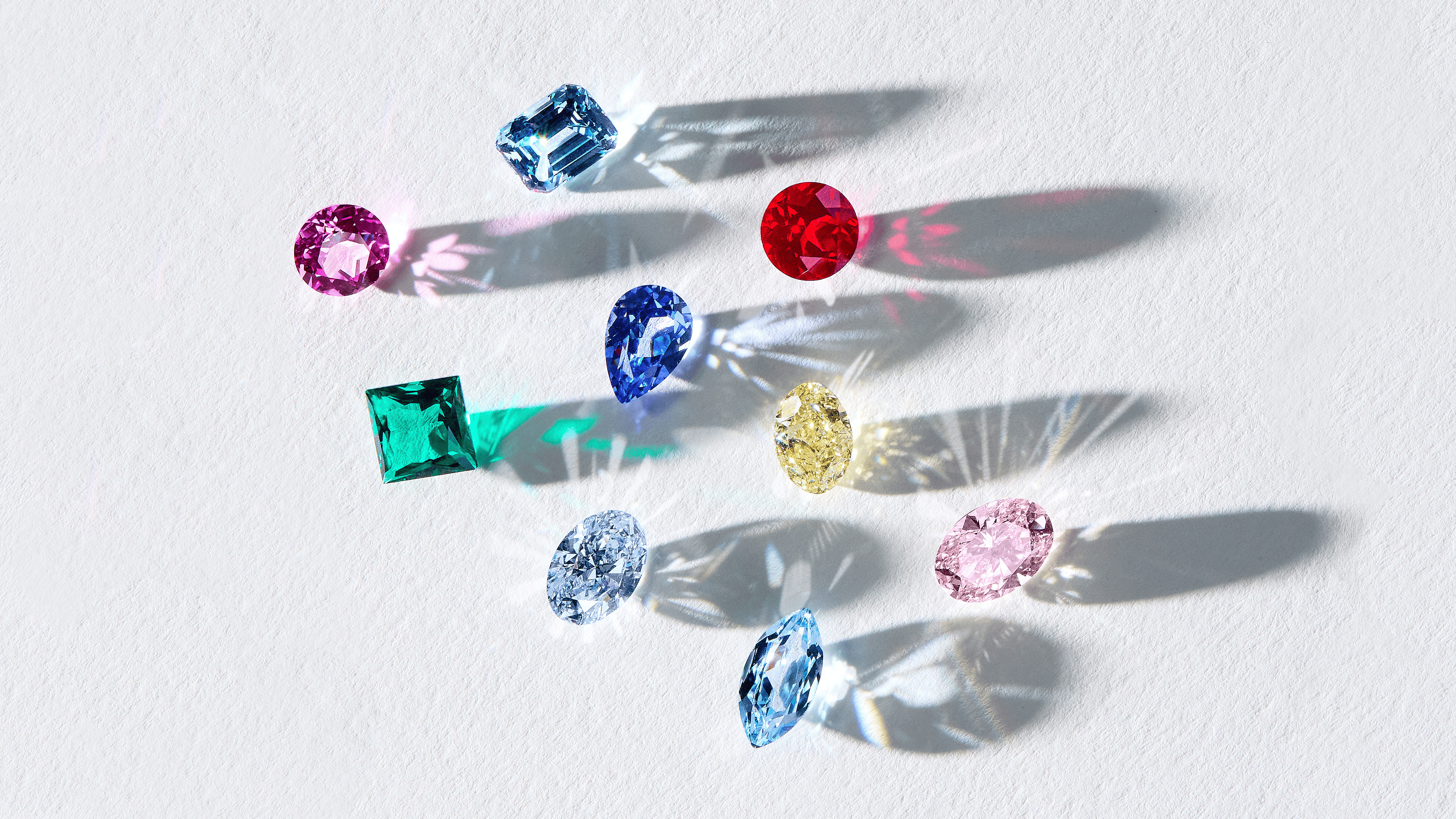
If green feels right but you would like to see the full range of coloured gemstones before deciding, we also have a green moissanite range. If you are interested in colours other than green, we offer a full selection of coloured sapphires.

FAQs
Your questions, answered.
A green diamond is a real diamond. It is carbon crystallised in the same cubic structure as any colourless stone, with a 10/10 Mohs hardness and the same visual brilliance. The colour comes from structural defects in the crystal lattice that absorb red and infrared light. Green lab-grown diamonds are chemically identical to mined diamonds; they differ from mined green diamonds only in how the colour was introduced – controlled laboratory treatment rather than geological radiation over millions of years.
Mined green diamonds get their colour from exposure to radiation in the Earth, which changes their atomic structure and causes them to absorb red light and appear green. Lab-grown green diamonds are typically created by first growing a colourless diamond using CVD or HPHT methods, then applying controlled irradiation to produce the same green colour.
Mined green diamonds are among the rarest fancy-colour diamonds, with only a few significant stones coming to market each year. Notable examples include the 41-carat Dresden Green diamond, which has never left museum ownership. Lab-grown green diamonds are not rare in the same sense – the production process is controlled and repeatable.
Mined green diamonds at significant sizes with strong colour saturation routinely exceed hundreds of thousands of USD per carat. The Aurora Green diamond (a 5.03-carat Fancy Vivid Green) sold at Christie’s Hong Kong in 2016 for USD$16.8 million. Lab-grown green diamonds carry a premium over colourless lab-grown stones, with that premium increasing at higher fancy-colour grades. Still, they remain substantially below the price of mined greens at equivalent grades, around $1,000–3,000 per carat (dependent on colour).
No. The irradiation treatment that creates green in a lab-grown diamond is permanent and stable under all normal wearing conditions. The colour will not fade in sunlight or change with cleaning. The only green diamonds that change colour are mined chameleon diamonds – a rare phenomenon involving temporary hue shifts in response to heat or prolonged darkness.