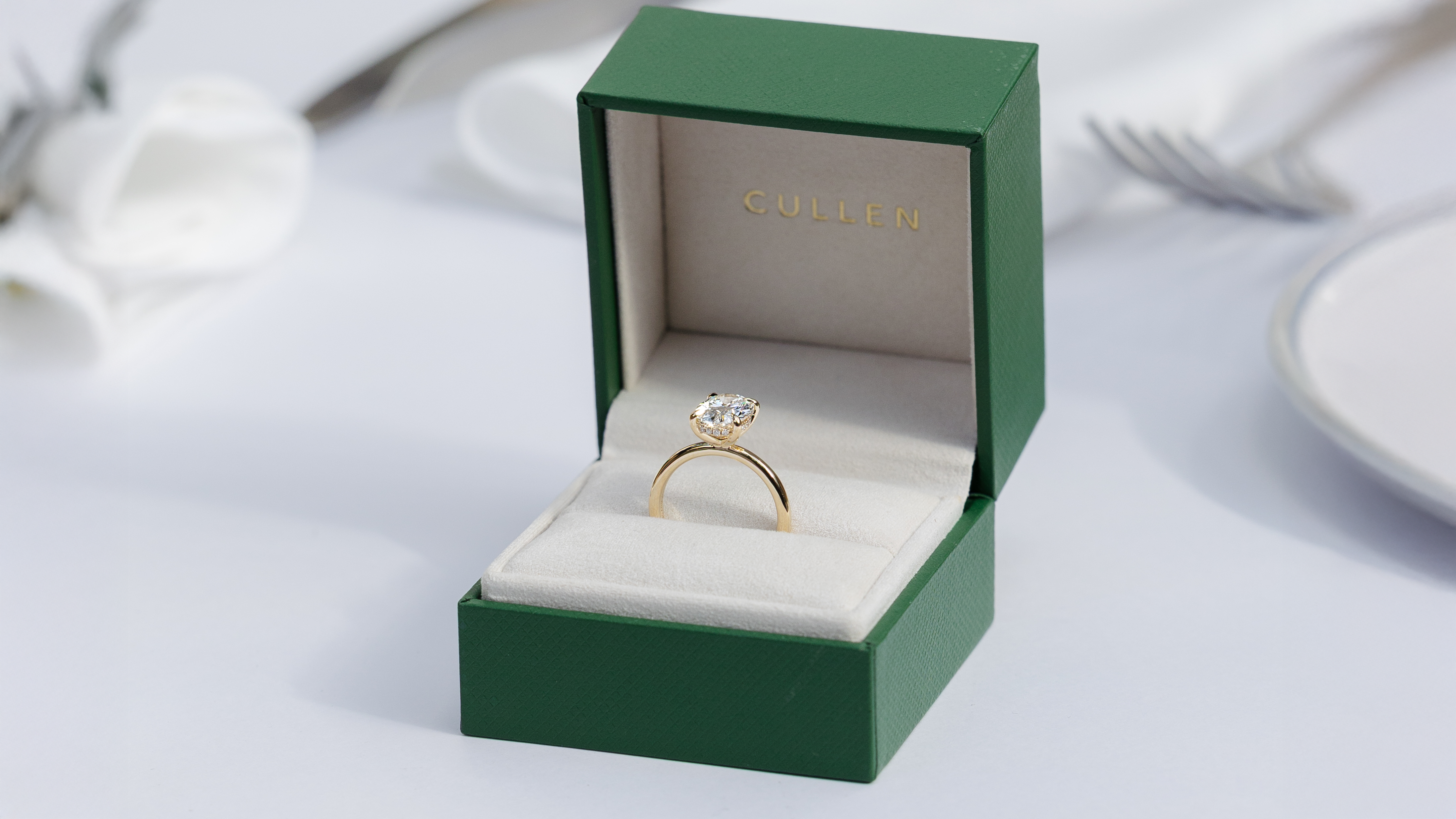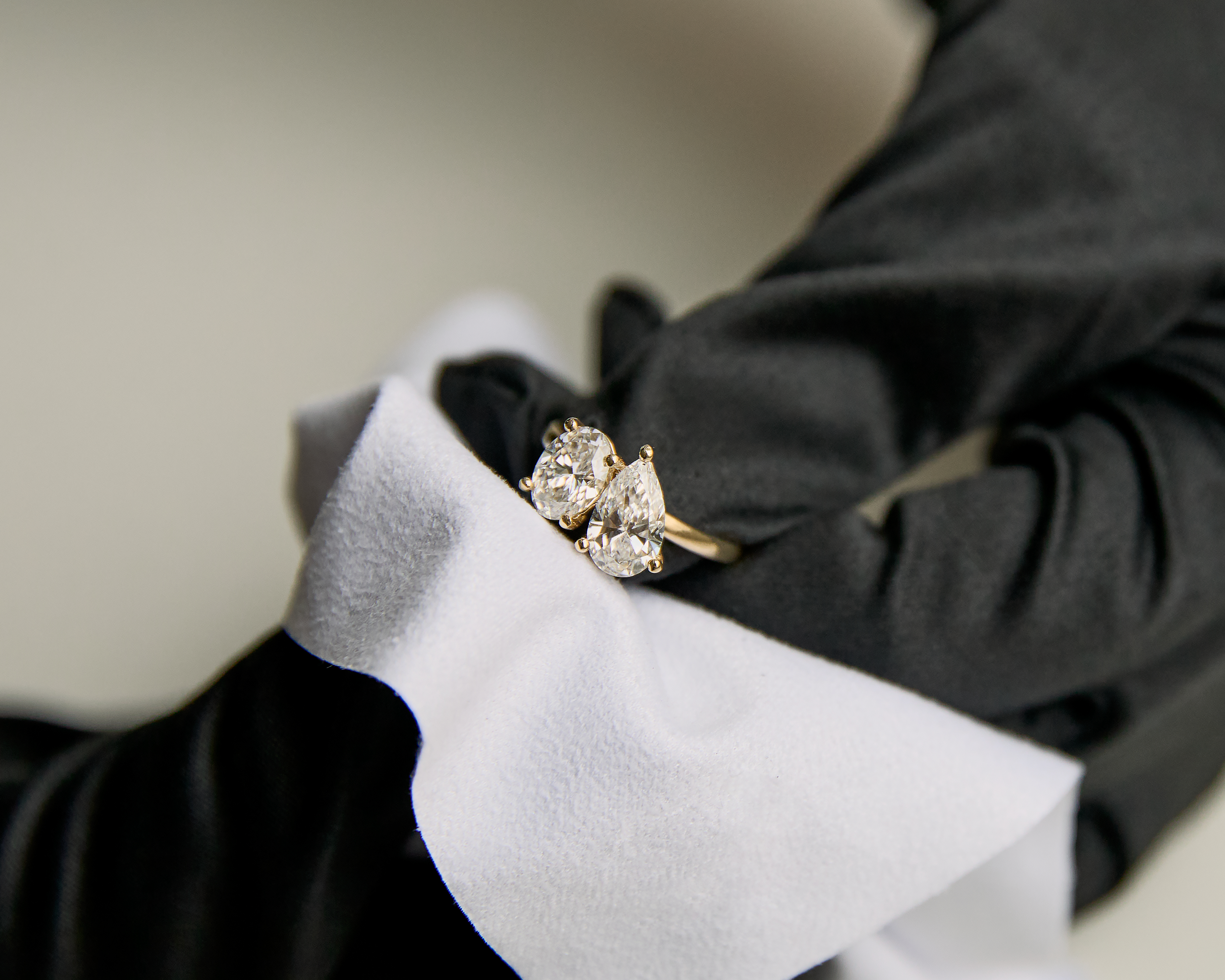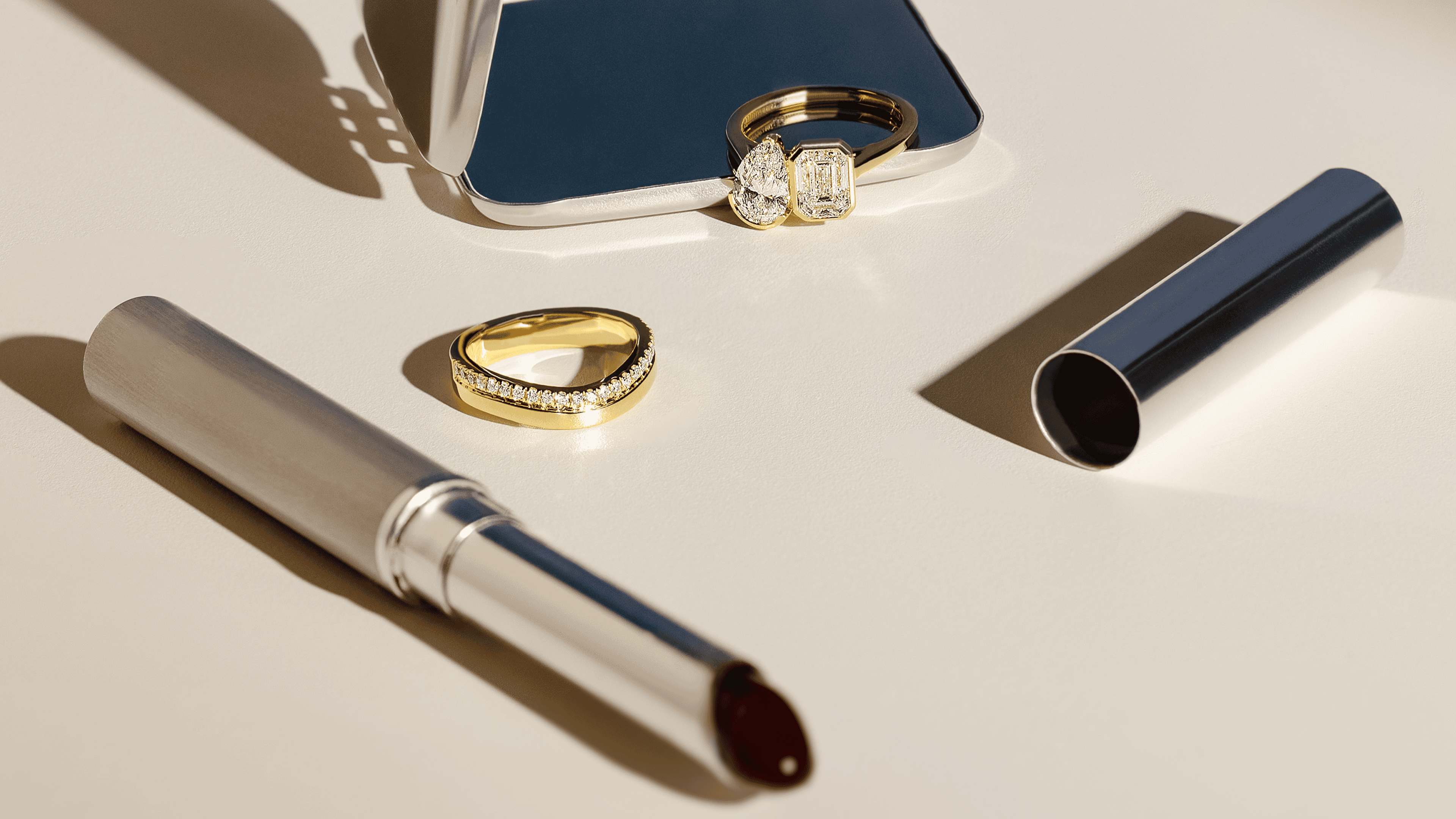
Once you have slipped your ring on for the first time, it is completely understandable if you never want to take it off. Diamond, moissanite and sapphire are among the hardest and most durable gemstones, which makes them ideal for everyday jewellery. Even so, your ring is still a fine piece of craftsmanship, and most long-term wear happens to the metal and setting rather than the gemstone itself. Taking your ring off in a few specific situations can help protect its shine, keep the setting secure, and reduce the chance of accidental loss.
Can You Shower or Swim With an Engagement Ring On?

Wearing your engagement ring in the shower, pool, hot tub, or while tanning can expose it to a mix of heat, residue and chemicals that gradually dull sparkle and compromise the setting. Soaps, shampoos and body products can leave a film on the gemstone and under the setting, blocking light and making the ring look less brilliant. Hot tubs add another layer of risk because heat combined with chemicals can be particularly harsh on metal finishes and settings over time. Tanning lotions and sprays can also create build up that is difficult to remove and may contribute to discolouration.
Chlorine is another common culprit. While chlorine will not damage a diamond or moissanite directly, high levels of chlorine can add grime to the surface of your gemstone, preventing light from entering properly and making it appear dull. Over time, repeated exposure can also affect certain metal alloys and surface finishes. In general, 18k yellow gold tends to handle chlorine exposure better than some alternatives because of its composition and durability, while white gold may experience faster wear to rhodium plating and rose gold can be more prone to discolouration due to its higher copper content. Metals with higher copper content are particularly sensitive, and chlorine related wear can be subtle at first, sometimes only becoming obvious when prongs weaken. For longevity and peace of mind, it is best to remove your ring before swimming, showering, using a hot tub, or tanning, and store it somewhere secure.
Can You Wear Your Engagement Ring to the Gym?
It is best not to wear your engagement ring to the gym, particularly for activities that involve impact, pressure, or gripping with force. Weightlifting, boxing, and similar training can scratch or dent precious metals, gradually warp the band, or knock the setting in ways that loosen prongs over time. Even if the damage is not immediately obvious, repeated stress can compromise the ring’s structure and increase the chance of losing your gemstone later. If your workout involves bars, handles, or contact, taking your ring off beforehand is the safest choice.
Can You Wear an Engagement Ring to the Beach or in the Ocean?
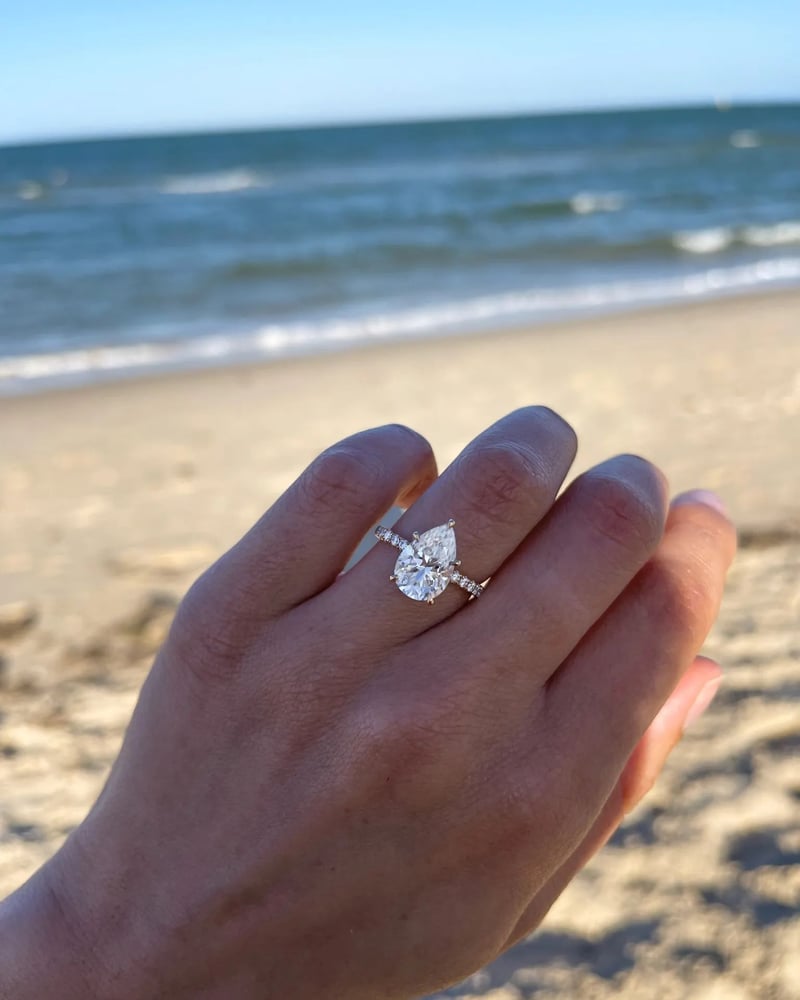
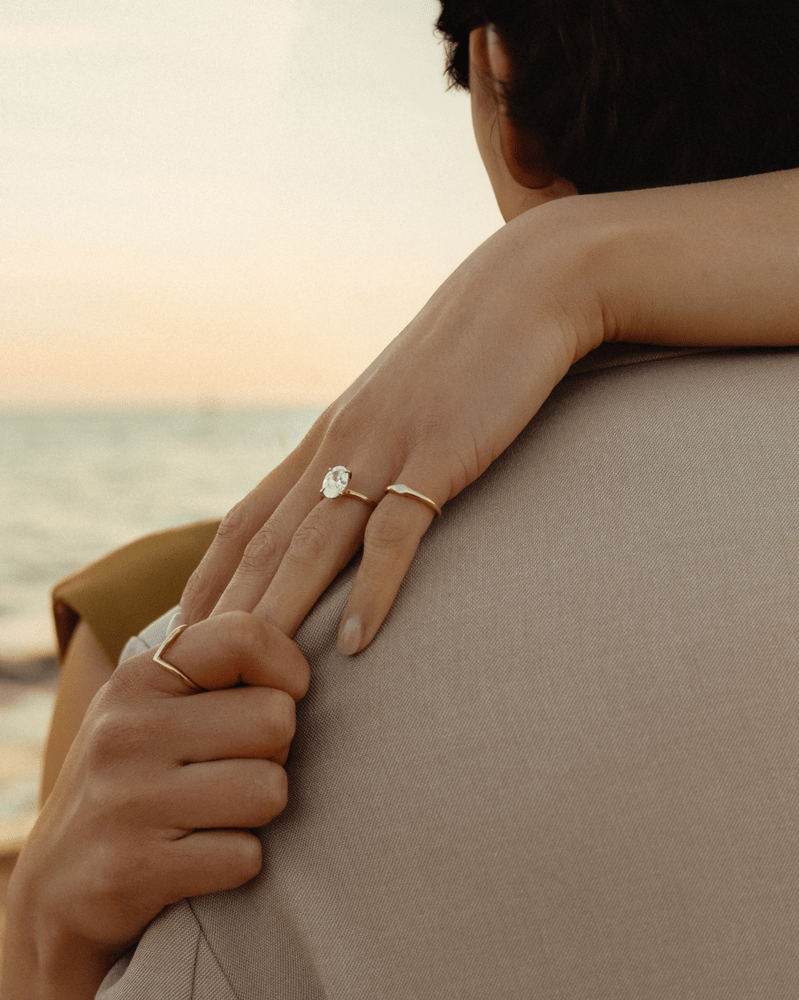
We recommend removing your ring before heading into the ocean. Like chlorine, salt water can contribute to gradual changes in precious metals and weaken joints or settings over time, especially with repeated exposure. There is also a practical reason that matters just as much. Cold water can temporarily shrink your fingers, which can cause your ring to fit more loosely and increase the risk of it slipping off unnoticed. If you are going in the water, it is far safer to leave your ring somewhere secure than to take that chance.
Should You Take Off Your Engagement Ring When Cleaning?
Household chores like cooking, cleaning, and gardening can be surprisingly rough on engagement rings. Cleaning products and chemical based hand sanitisers can affect metal finishes and contribute to discolouration over time, while hands on tasks increase the likelihood of knocks and scratches. Even when you are careful, the combination of friction, impact and chemicals can take a toll on the setting and band. If you are doing anything messy, chemical heavy, or hands on, removing your ring first is the simplest way to protect it.
Can You Sleep With an Engagement Ring On?
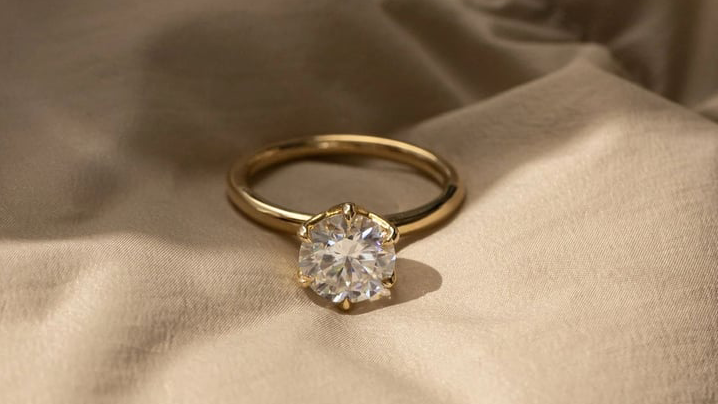
Whether you wear your engagement ring to bed comes down to personal preference, but removing it before sleeping can offer extra protection. Rings, especially those with raised settings, can snag on sheets, hair, or clothing during the night, and that repeated tugging can gradually loosen prongs or shift the setting. If you do take your ring off at night, choose a consistent safe spot like a ring dish, a fabric lined jewellery box, or a ring pouch so it is protected and easy to find in the morning.