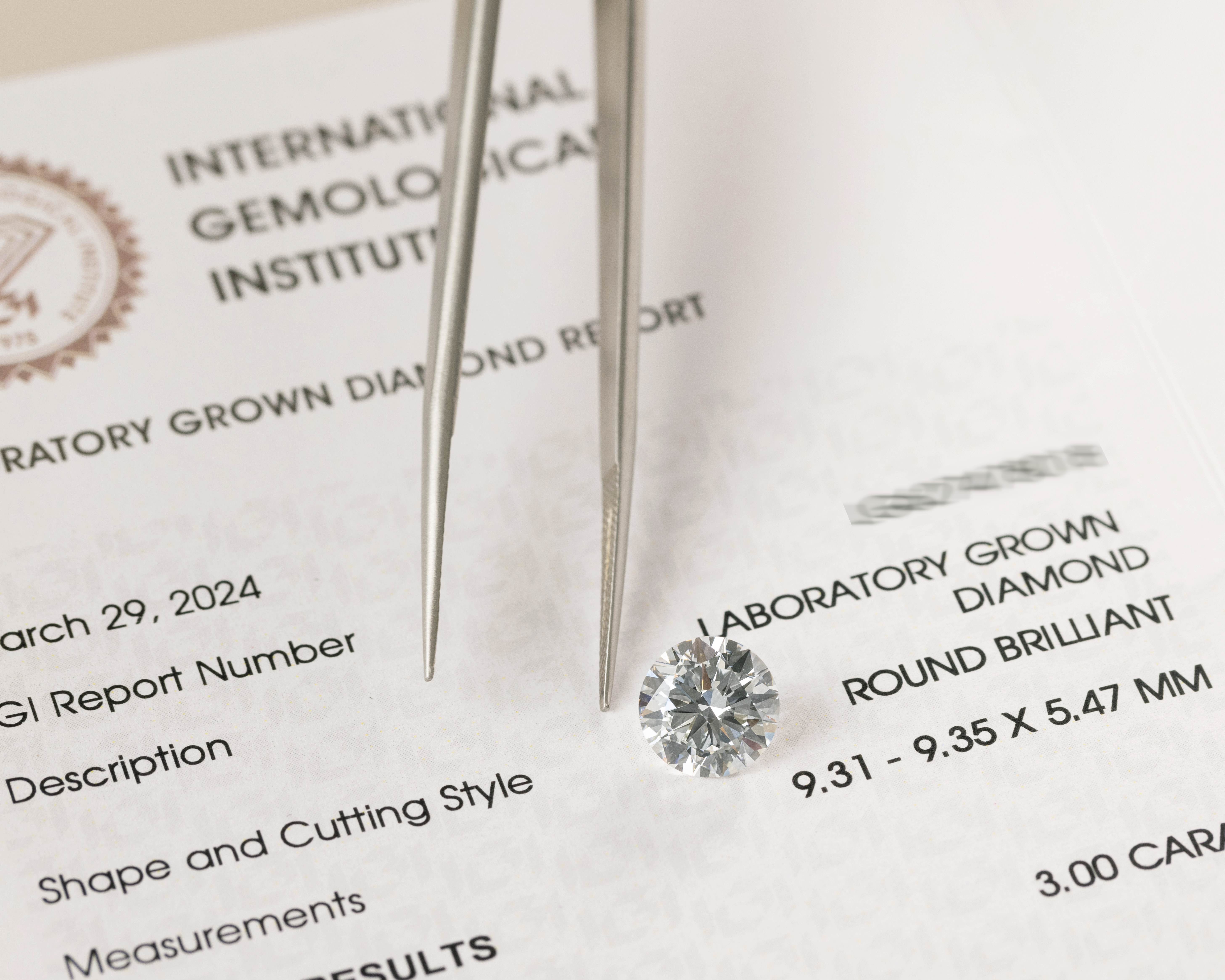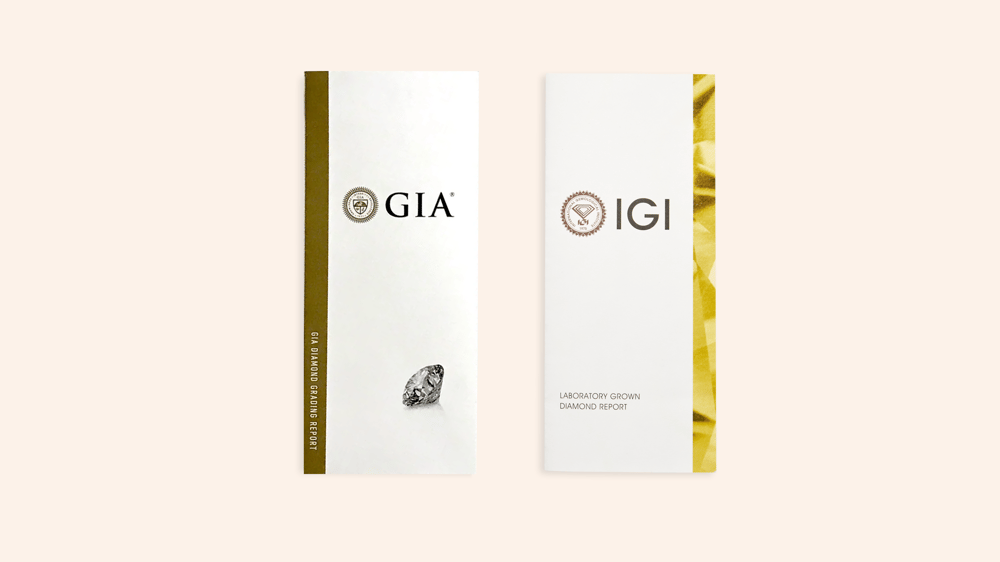
When choosing an engagement ring, beauty is only part of the story. What sits beneath the surface matters just as much – how a diamond is made, how it’s graded, and how its quality is verified. At Cullen, every piece is designed to mark a meaningful moment. Our engagement jewellery pairs considered design with transparency and care at every stage, including how our lab grown diamonds are independently certified. Certification isn’t an afterthought, it’s part of what ensures each piece is crafted to endure. Two names appear most often in this conversation: IGI and GIA. Both are globally recognised grading laboratories, and both offer independent assessment. Understanding the difference between them isn’t about technical detail for its own sake. It’s about confidence – knowing what you’re choosing, why it matters, and how it supports the enduring beauty of the ring you wear every day.
A Brief History of Lab Grown Diamond Certification
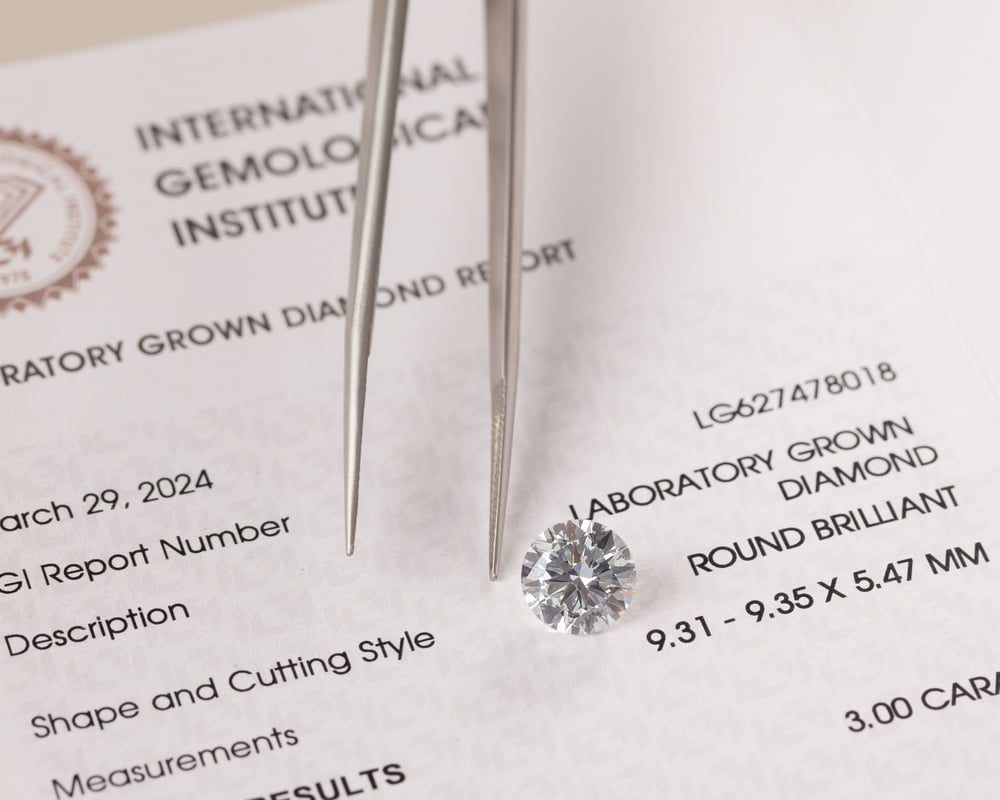
Lab-grown diamonds became commercially viable in the 1980s, following the creation of the first gem-quality stones in 1971. While both IGI and GIA are recognised by the Jewellers Association of Australia and adhere to international grading standards, their engagement with lab grown diamonds developed at different speeds. IGI began grading lab grown diamonds in 2005, applying the same rigorous standards used for mined diamonds. This early adoption positioned IGI as a leader in lab grown diamond certification – often regarded as the industry benchmark. GIA focused exclusively on mined diamonds for many years, expanding its grading services for lab-grown diamonds only in 2007. While it has since expanded its grading services to include lab grown diamonds, its later entry into the category has shaped how the two laboratories are perceived today.
What Igi Certification Means
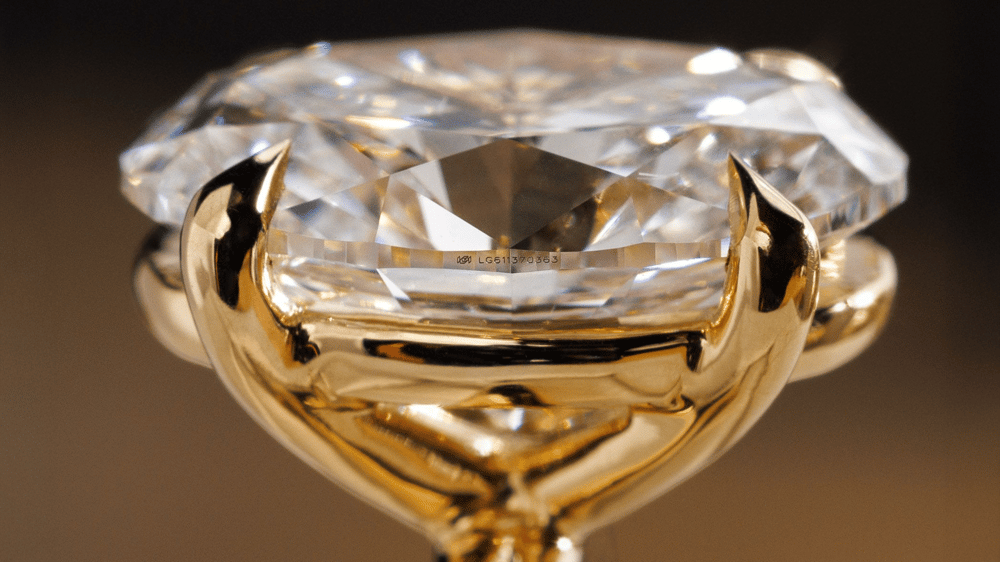
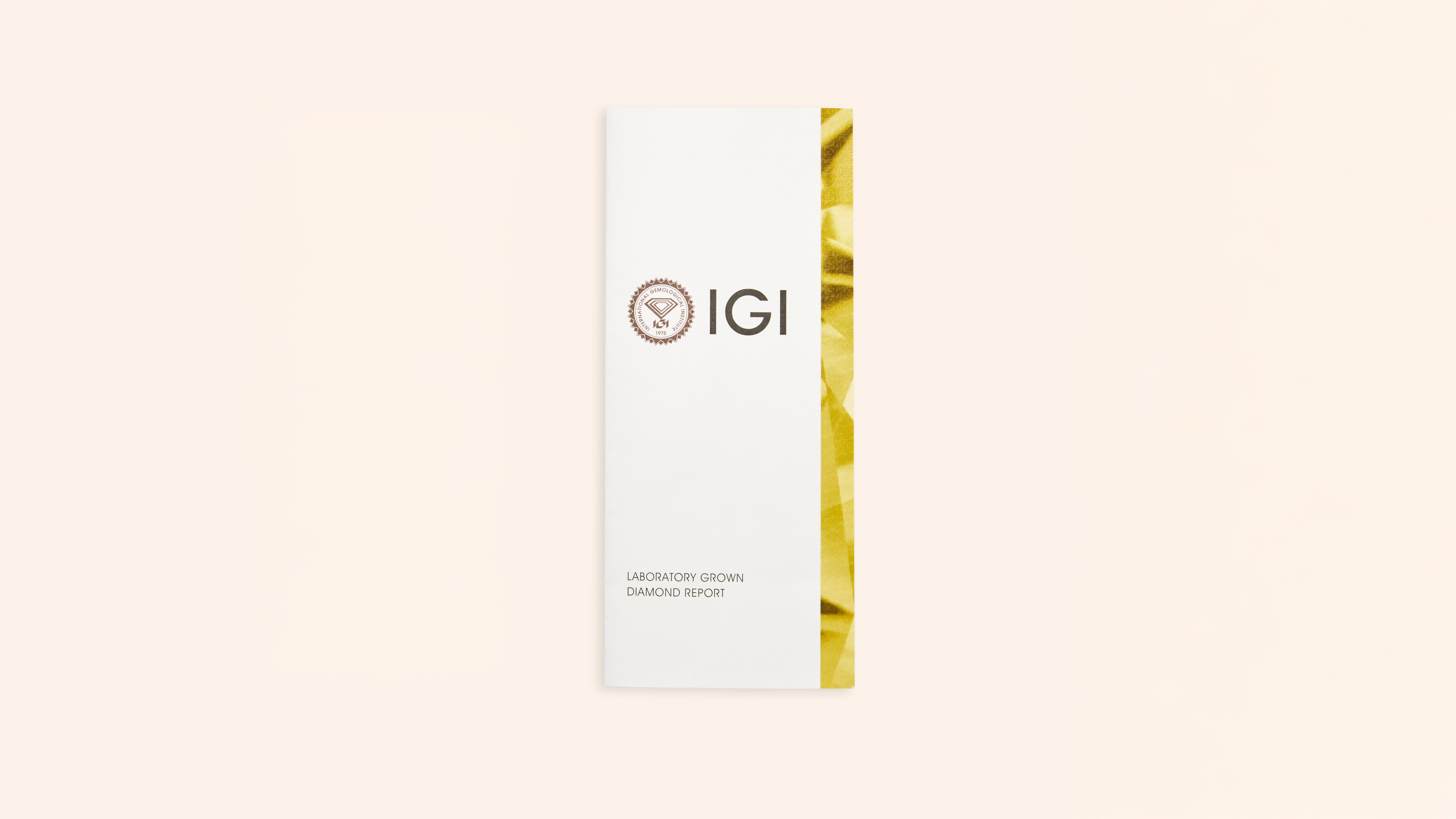
Founded in 1975, IGI was the first gemological laboratory to receive ISO 17025 accreditation for both mined and lab grown diamonds – the highest global standard for testing and calibration. Every IGI-certified lab grown diamond is clearly identified as such, with both the report number and “lab grown” laser-inscribed on the diamond’s girdle. Reports are issued in a distinct yellow format, ensuring transparency and easy identification. IGI follows a meticulous grading process. Diamonds are anonymised on arrival, examined by multiple gemologists at different stages, and assessed using advanced gemological technology. Each report includes multiple security features, along with a unique verification number. Today, IGI is widely relied upon by leading lab grown diamond retailers across Europe, Asia, and beyond.
What Gia Certification Means

GIA certification is internationally recognised, particularly in the United States and parts of Western Europe. Its reports detail the Four Cs – cut, colour, clarity, and carat – alongside proportions, symmetry, polish, fluorescence, and a diagram of inclusions. While GIA’s grading is trusted and precise, its certification process typically takes longer and comes at a higher cost compared to IGI. GIA has also recently changed how it grades lab-grown diamonds, cementing its preference for mined diamonds and leaving IGI as the largest laboratory that continues to use the 4Cs grading system for lab-grown diamonds. The GIA grading system for lab-grown diamonds has shifted to a more descriptive approach, classifying most lab-grown diamonds as either 'Premium' or 'Standard'. Grouping characteristics from the 4Cs like Colour and Clarity into ranges. While GIA diamond certification is widely recognised, especially in the United States, these recent changes may lead many to prioritise IGI for lab-grown diamonds, as its certificates provide more information than GIA's more descriptive reports.