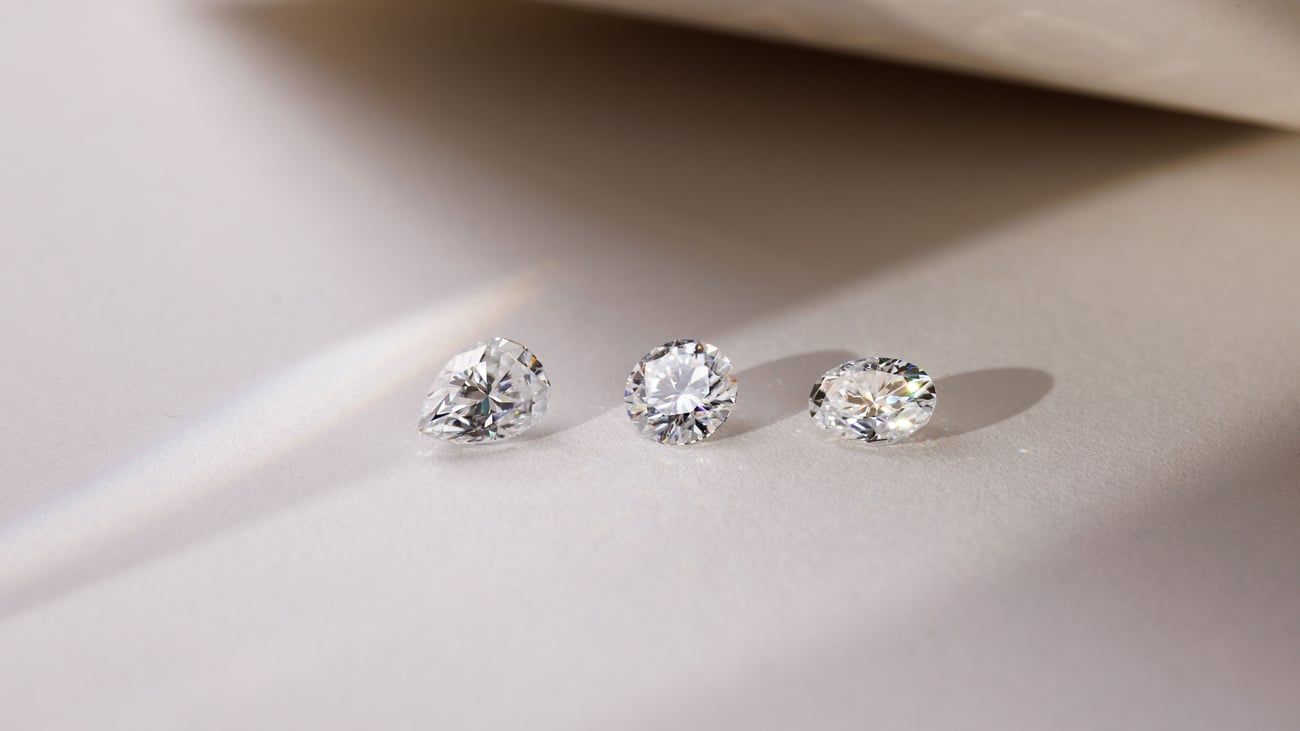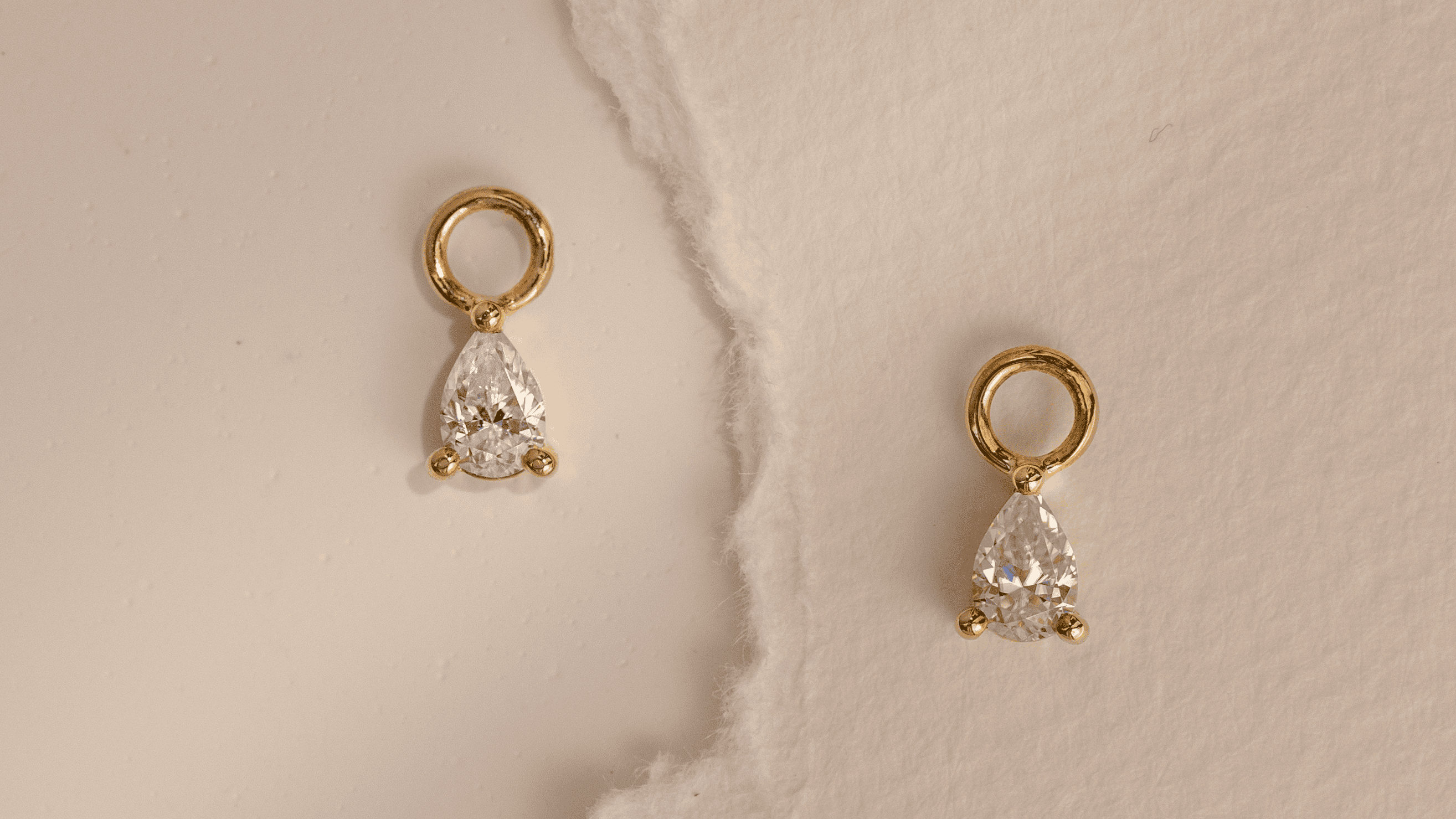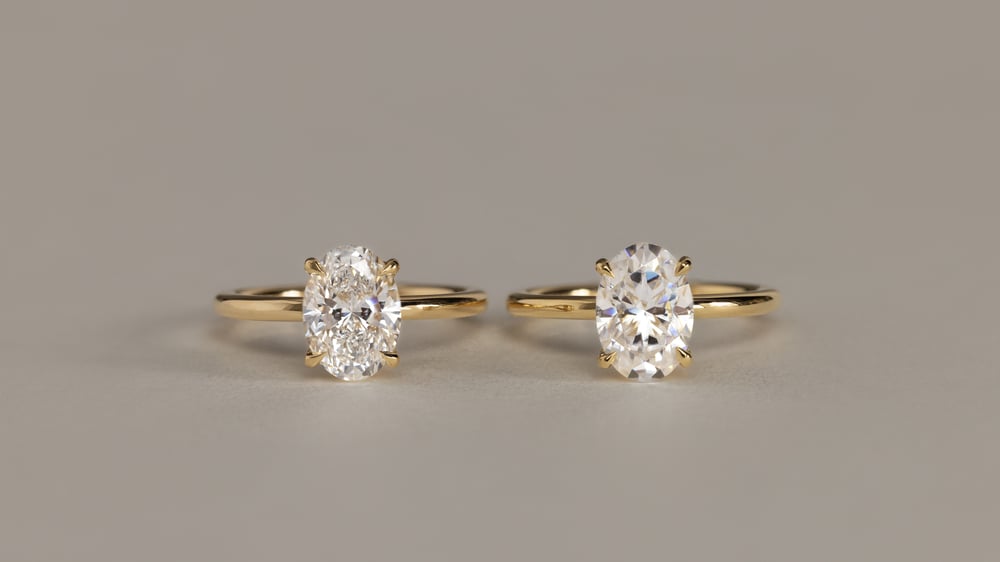
What two stones sit at the centre of engagement jewellery, mark meaningful moments, and are known for their brilliance? Moissanite and diamond. They are often spoken about together, linked by tradition, symbolism, and their relationship with light. Both are chosen to represent commitment. Both are designed to be worn every day. And both are valued for how they reflect and return light. Yet the difference between them is subtle. When set side by side, the variations are not about better or worse, but about how each stone behaves, feels, and presents itself. The distinction is less about comparison, and more about personal choice – noticing what feels right for you.
Brilliance and Fire
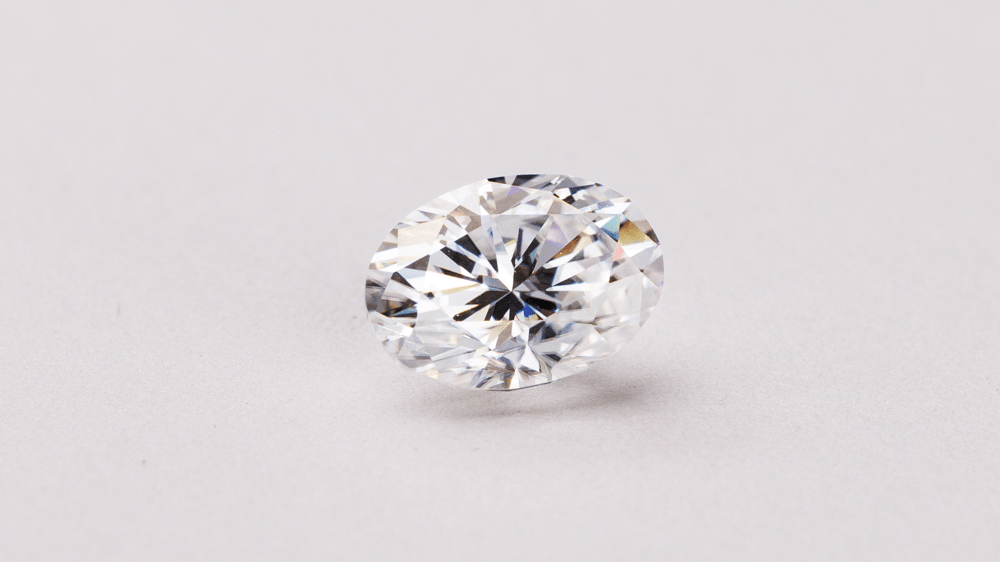
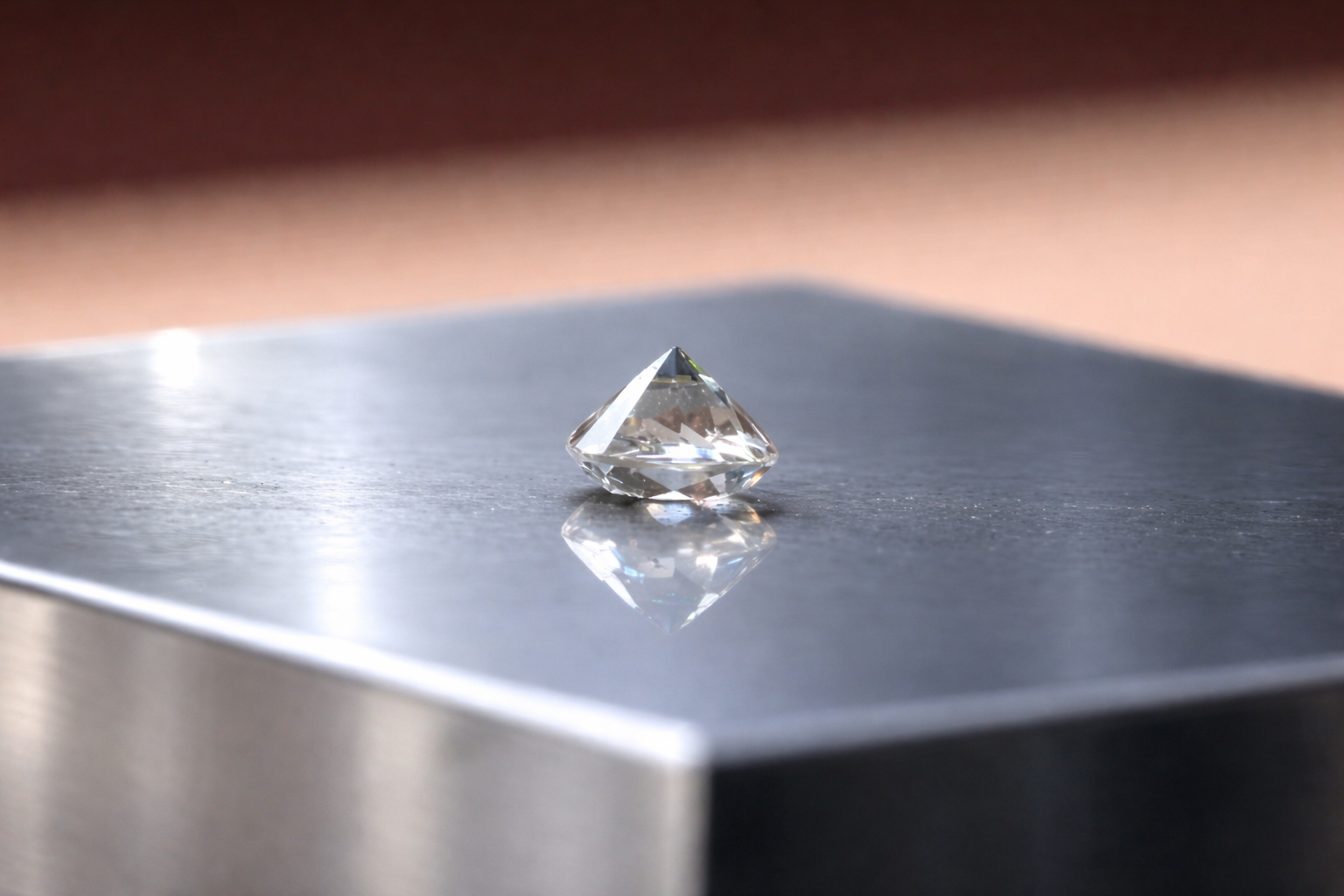
The most noticeable difference between moissanite and diamond lies in brilliance and fire. Brilliance refers to the flashes of light reflected from within the stone, while fire describes how white light disperses into colours as it travels through the gem. This behaviour is shaped by refraction – the way light bends as it enters and exits a stone. Moissanite has a higher refractive index than diamond, meaning it bends light more dramatically. As a result, it displays heightened brilliance and fire. In sunlight, this often appears as vivid, rainbow-like flashes – particularly in larger stones. Diamonds refract light differently. Their sparkle tends to sit within a more restrained palette of white, blue, and grey, creating a balanced, kaleidoscopic effect rather than colourful dispersion. As stone size increases, these differences become easier to identify.
Colour
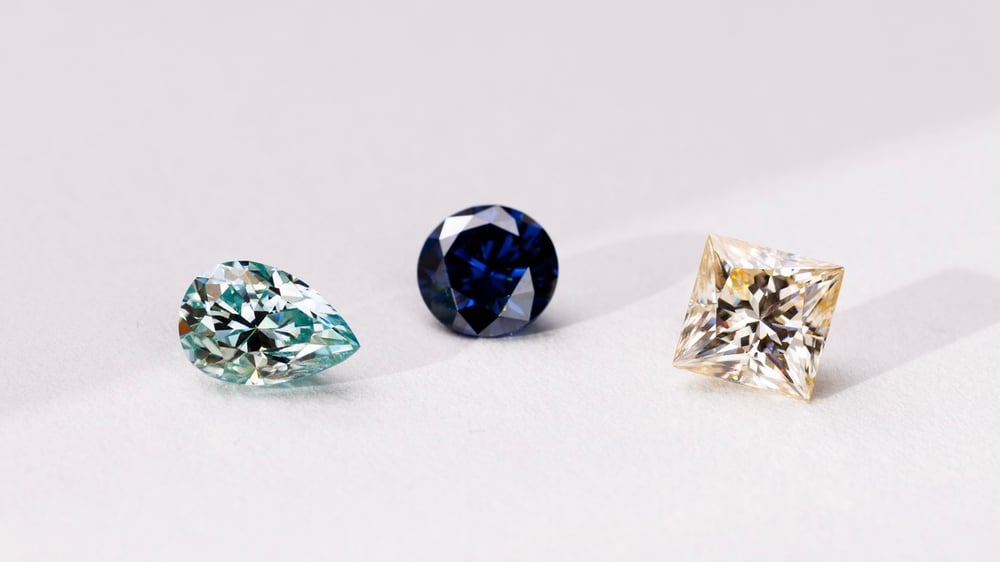
At first glance, a colourless moissanite and a diamond can appear remarkably similar. Differences in colour are subtle and generally only noticeable when stones are viewed side by side. Diamonds show no traces of other colours, while moissanite may display faint flashes of rainbow light in certain conditions, particularly bright sunlight. Outside of direct comparison, these variations are difficult for most people to detect. Moissanite is also available at Cullen in a considered range of colours, including green, grey, yellow, champagne, and blue – offering options beyond a traditional colourless stone.
Clarity
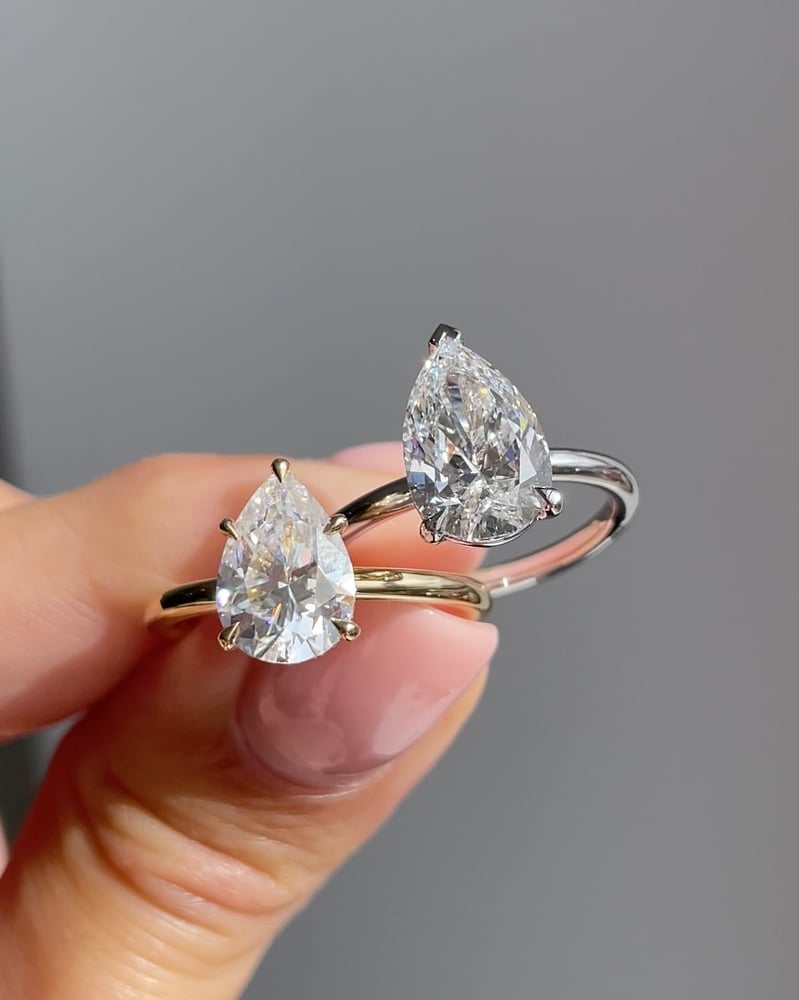
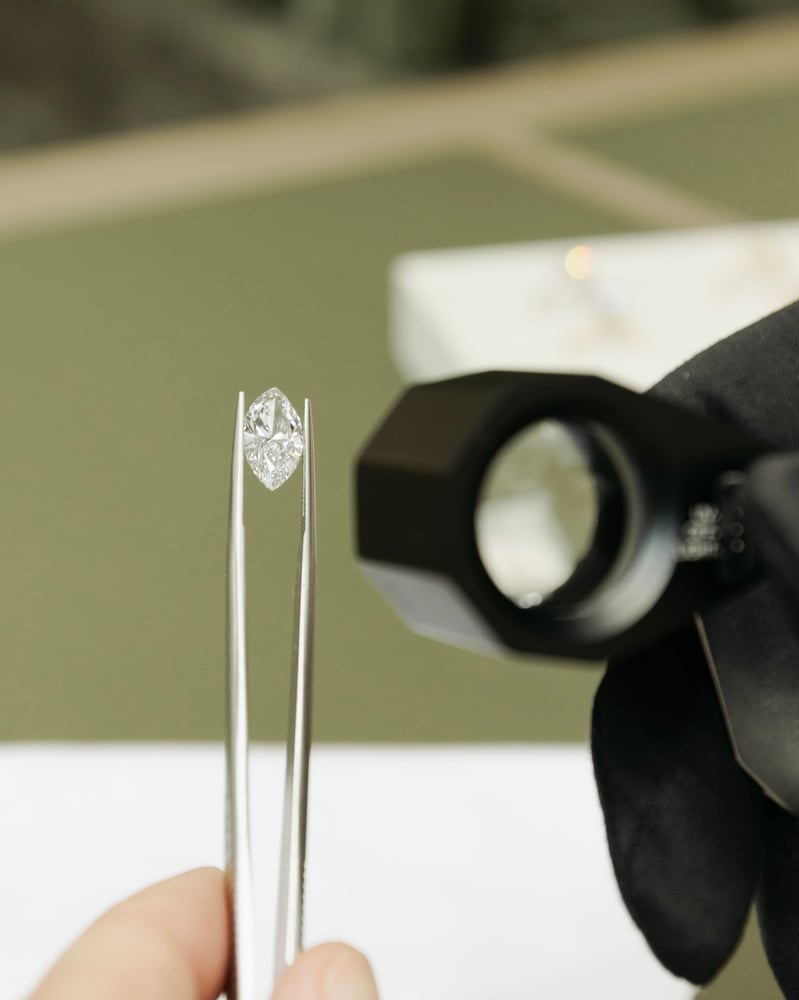
Clarity is often discussed when comparing moissanite and diamond, though it is not something most people can spot without magnification. Because moissanite is lab grown, it typically contains very few imperfections. Cullen moissanite stones are graded VVS1–VVS2, meaning they are eye-clean, with no inclusions visible to the naked eye. Diamonds vary more widely in clarity. Lower grades may contain inclusions – small imperfections that can interrupt the path of light through the stone, softening brilliance and fire – while higher grades appear clearer and brighter.
Choosing With Confidence
Moissanite and diamond differ in ways that are rarely obvious at first glance. Without direct comparison, those distinctions soften – leaving what matters most: how a stone feels when you wear it. For some, it’s the expressive brilliance and fire of moissanite. For others, the composed, familiar balance of a diamond. At Cullen, the right choice is an informed one – thoughtfully made, designed to endure, and chosen to mark a moment worth carrying forward.