Moissanite often finds its way into the diamond conversation. At first glance, the two appear strikingly similar – bright, colourless, and sharply faceted. But moissanite is not a diamond by another name. It is a gemstone with its own identity, structure and light signature – one that resonates strongly with couples drawn to modernity, clarity and considered choices.
A Gemstone With an Unusual Beginning
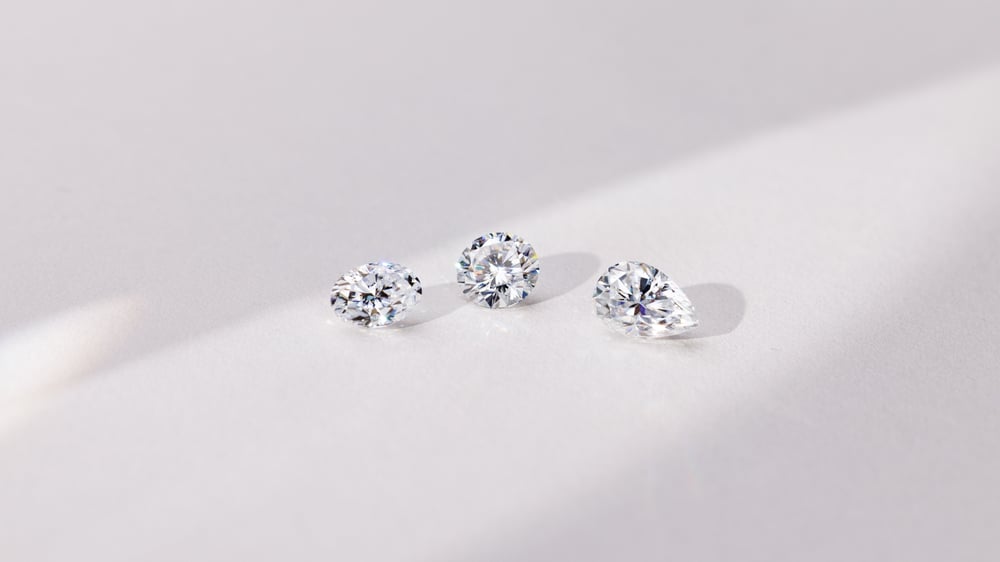
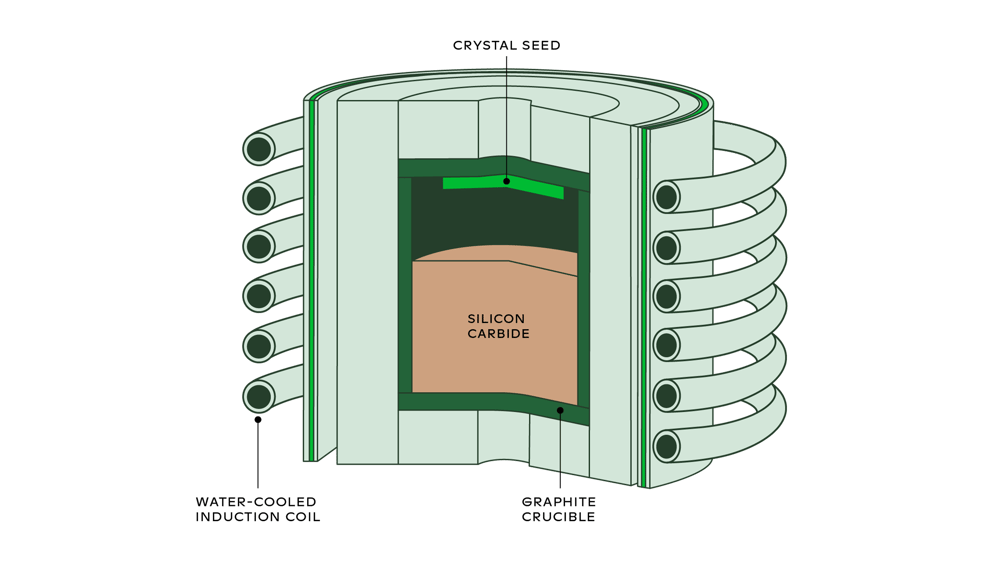
Moissanite’s story starts in 1893, when scientist Henri Moissan discovered tiny crystals in a meteor crater in Arizona. What he initially mistook for diamonds turned out to be something else entirely: silicon carbide, a mineral born of extraordinary conditions. Because naturally occurring moissanite is exceptionally rare, today’s stones are grown in controlled laboratory environments. This process allows for consistency, traceability and an ethical footprint aligned with what many of our clients value: beauty without compromise.
How Moissanite Differs
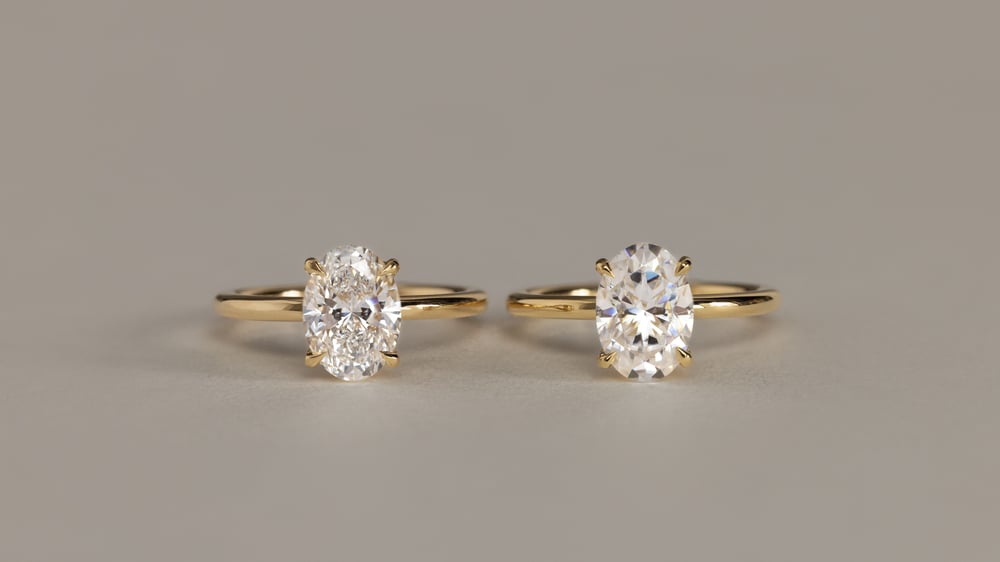
Though moissanite and diamonds share a similar visual language, their differences are subtle and intentional – the kind you notice when you look more closely.
Composition
Moissanite is made from silicon carbide, giving it a distinct structure and optical personality. Its brilliance and fire stem directly from this chemistry.
Durability
Measured at 9.25 on the Mohs scale, moissanite is one of the hardest gemstones used in fine jewellery. It withstands everyday wear with ease, maintaining its clarity and polish over time.
Clarity and Colour
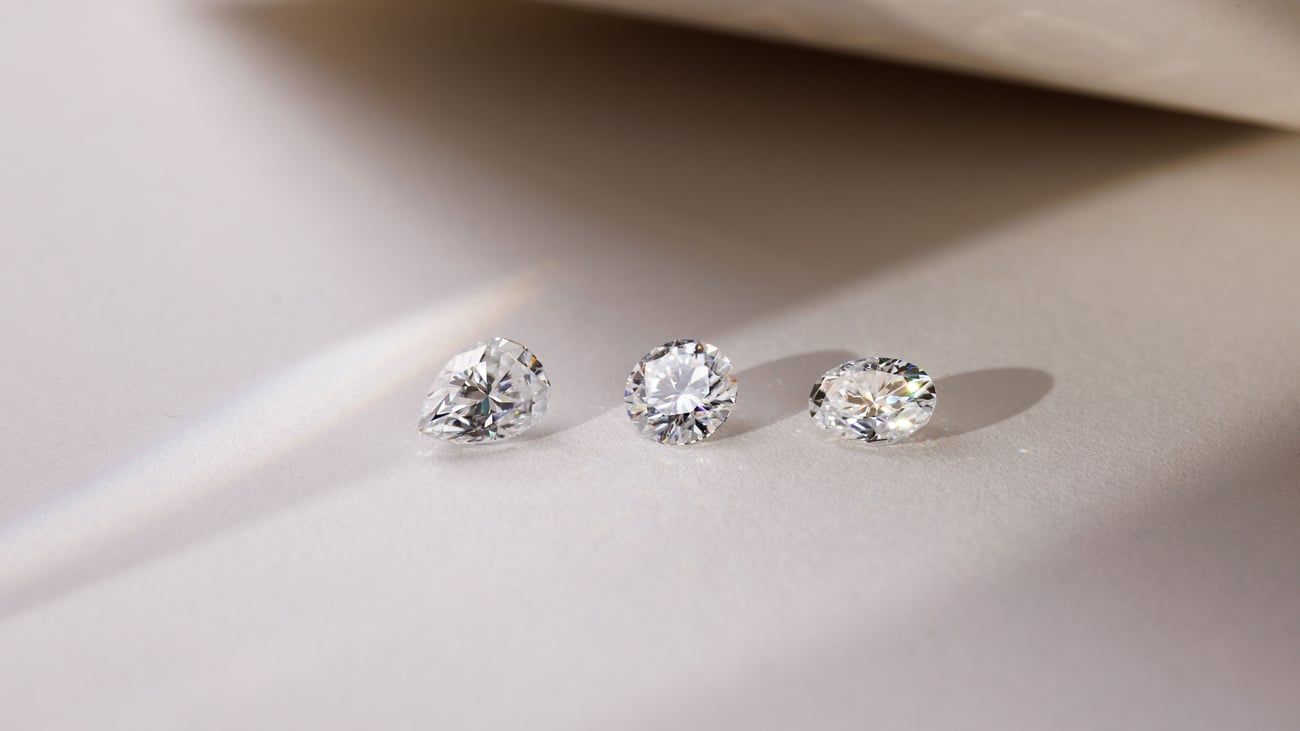
As a lab grown stone, moissanite is known for its consistently refined clarity. At Cullen Jewellery, our stones are graded VVS1–VVS2, offering a near-flawless appearance without the natural variation found in mined stones. Colour is equally stable. Most moissanite appears colourless unless intentionally chosen in a shaded variety.
A Modern Balance of Beauty and Value
Because moissanite is grown rather than mined, its value is determined largely by size, not by fluctuating clarity or colour grades. This allows couples to prioritise proportion, silhouette and design without sacrificing quality or ethics. Moissanite is not a stand-in for a diamond. It is a gemstone with its own story – one shaped by science, refinement and a distinctly modern brilliance. It stands confidently in its own category, chosen not as an alternative but as an intentional expression of taste.
Light Performance
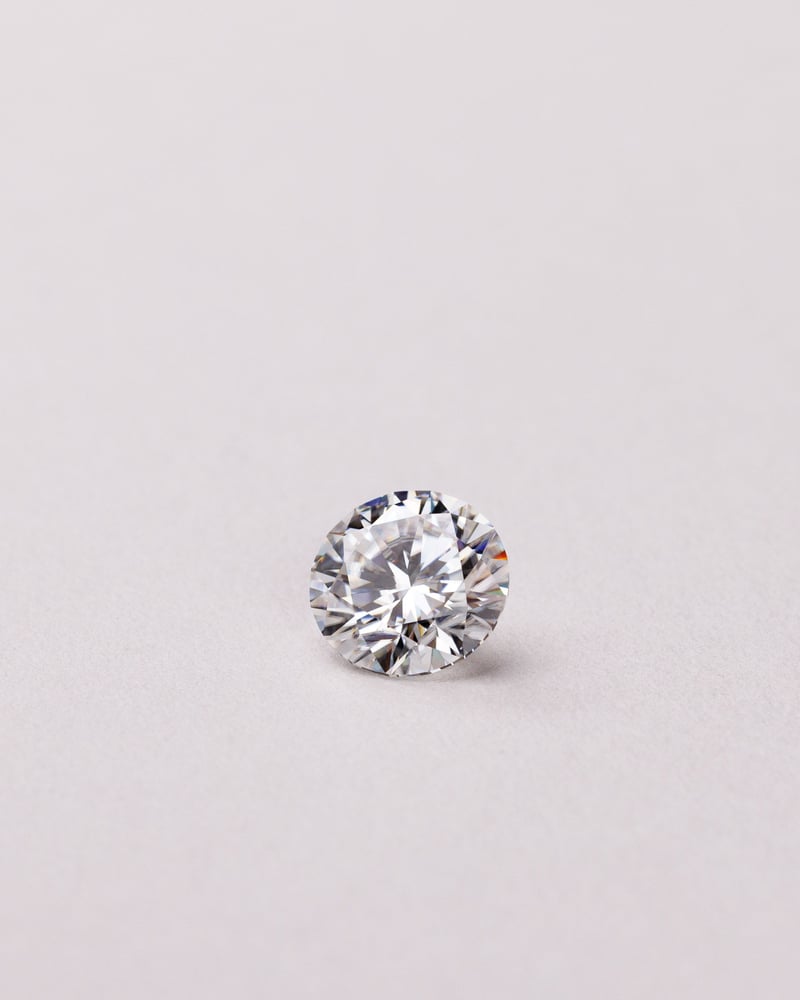
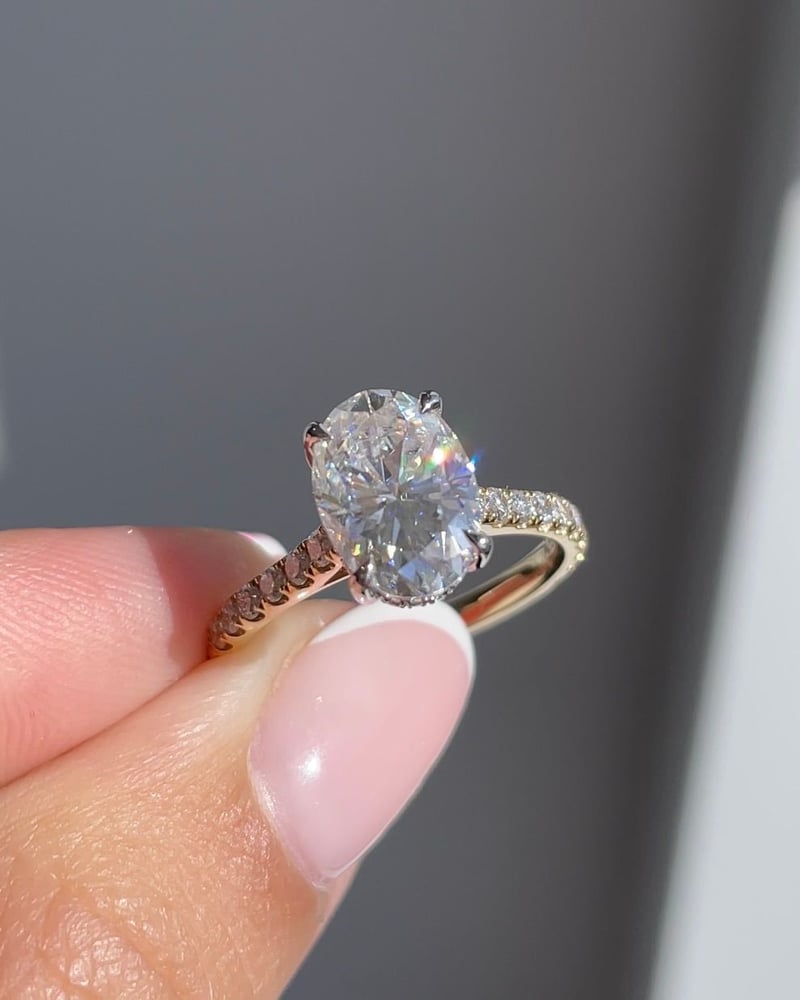
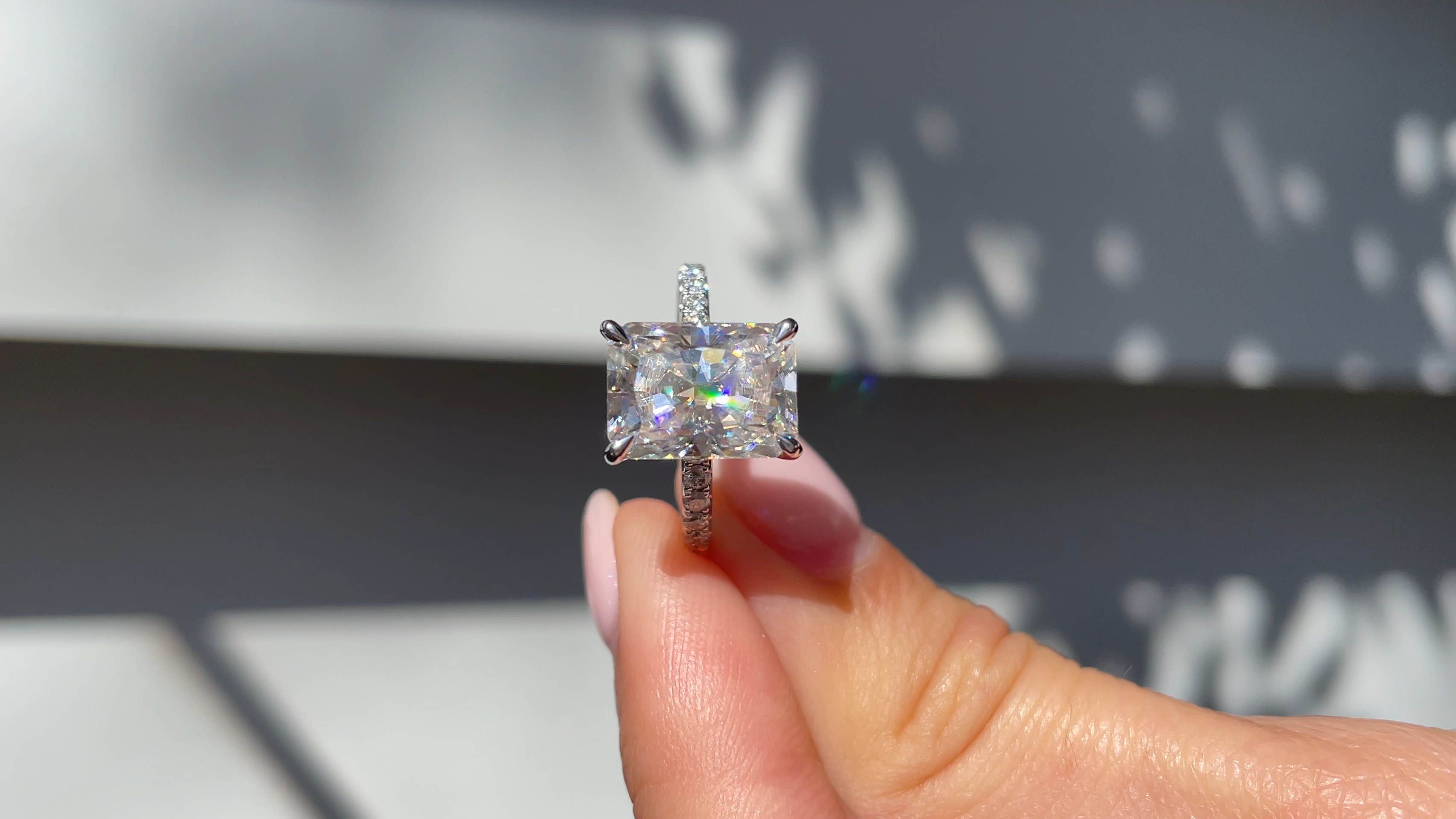
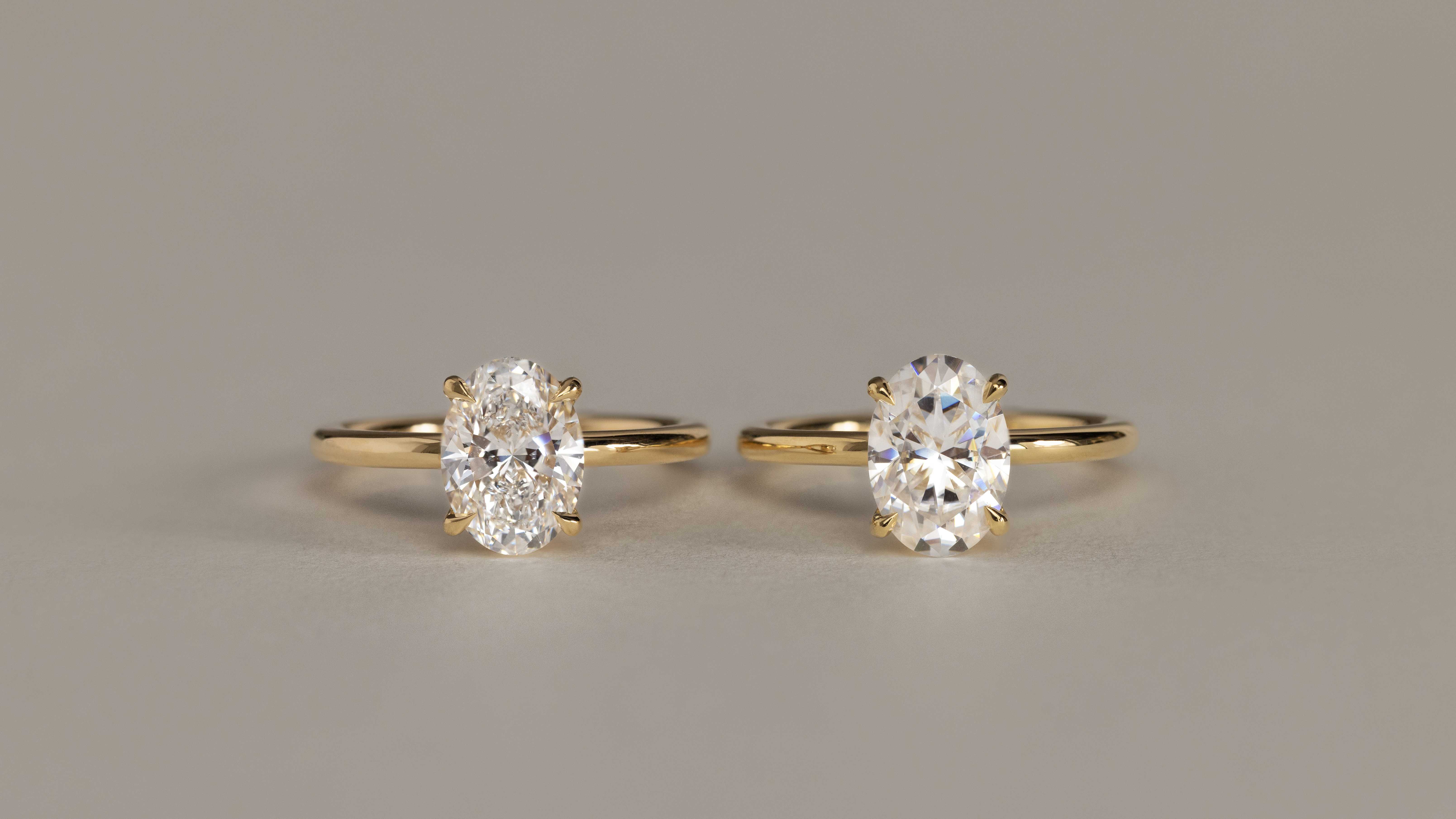
This is the quality clients respond to most. Moissanite has a higher refractive index than diamond, resulting in a pronounced brilliance, a vivid prismatic fire and a light pattern that feels contemporary and expressive. Where diamonds tend to offer a white, grey and blue tonal sparkle, moissanite leans into colour – a signature many people instantly recognise and love.
Considering Moissanite?
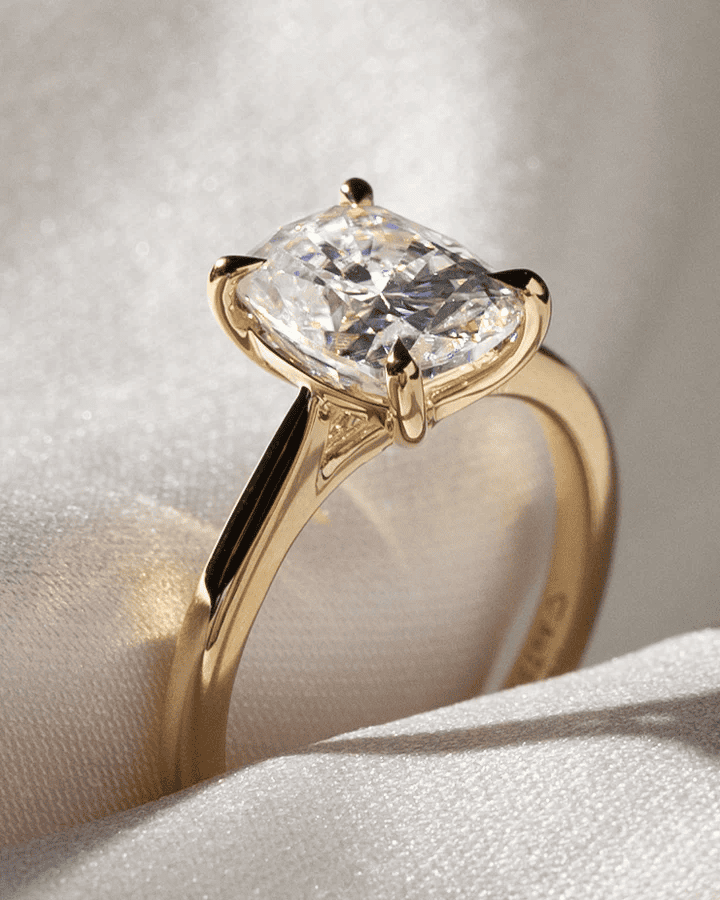
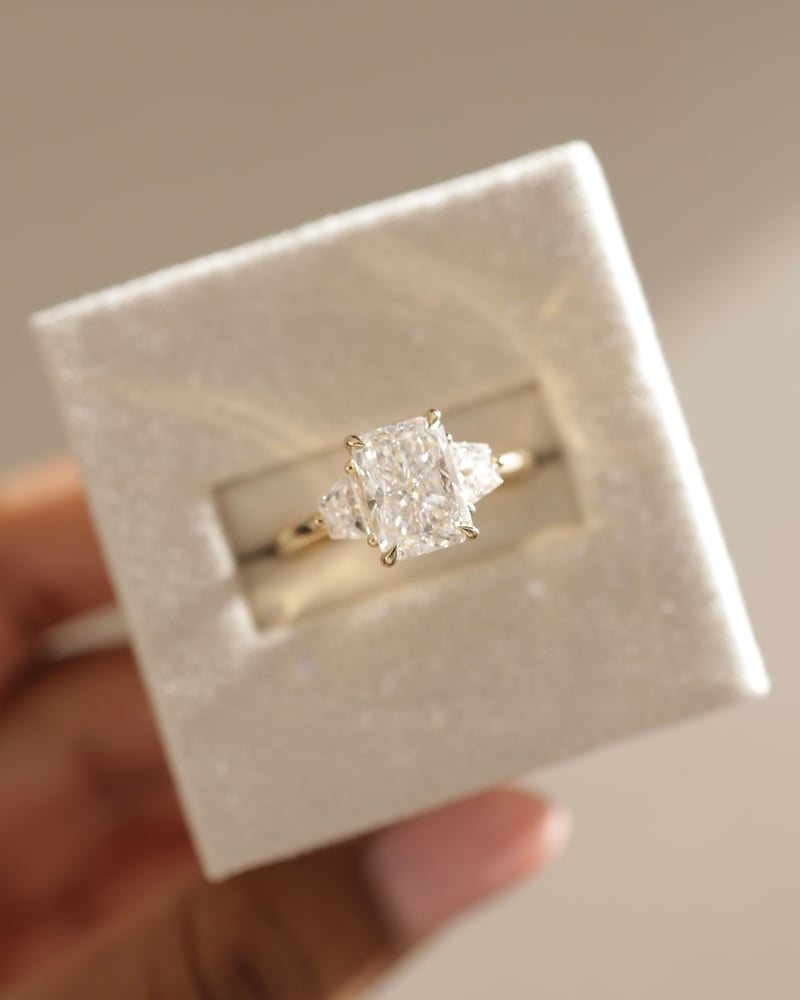
If you’re exploring options and want to understand how moissanite compares in person, we welcome you to visit our showroom. A conversation is often all it takes to see what speaks to you.