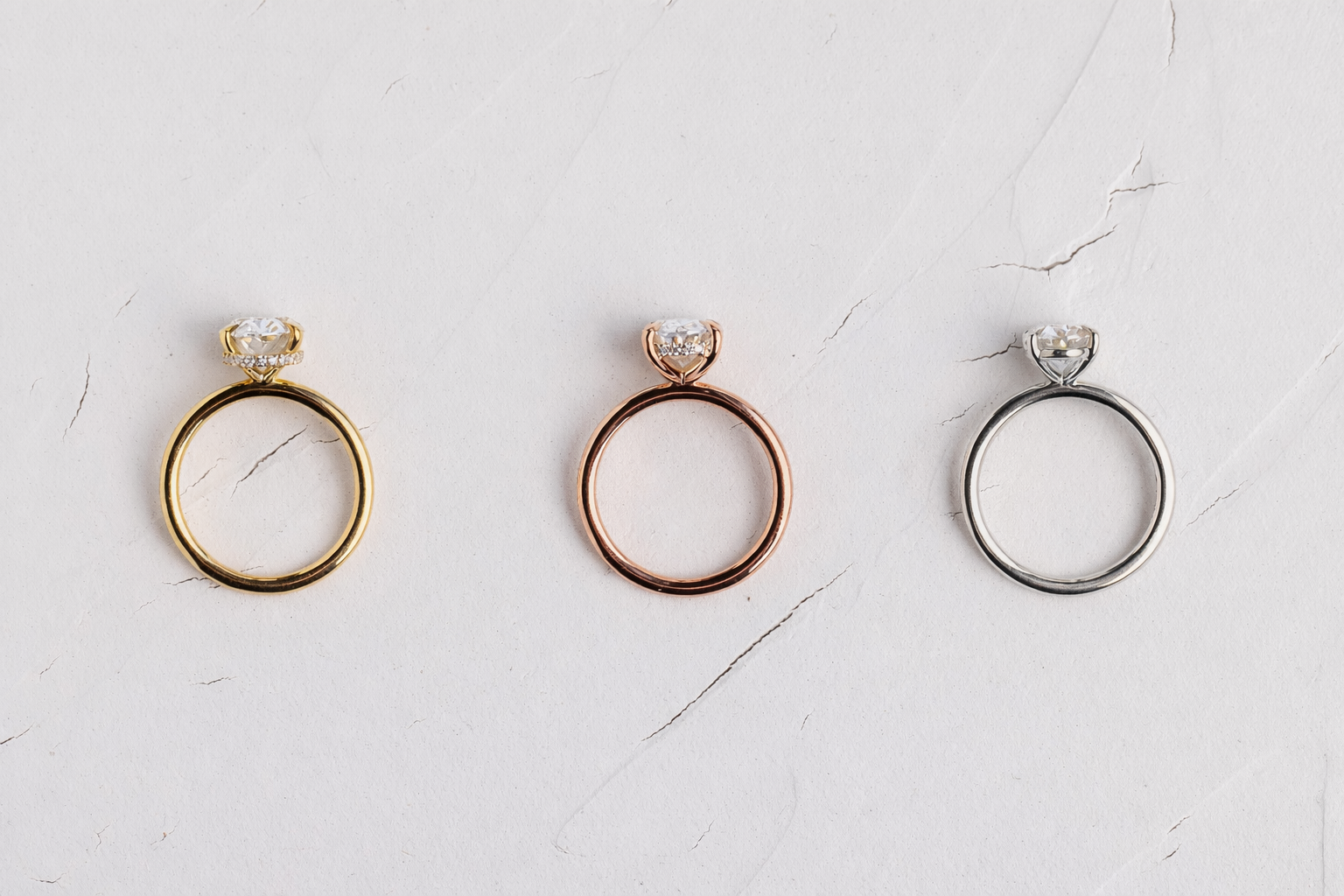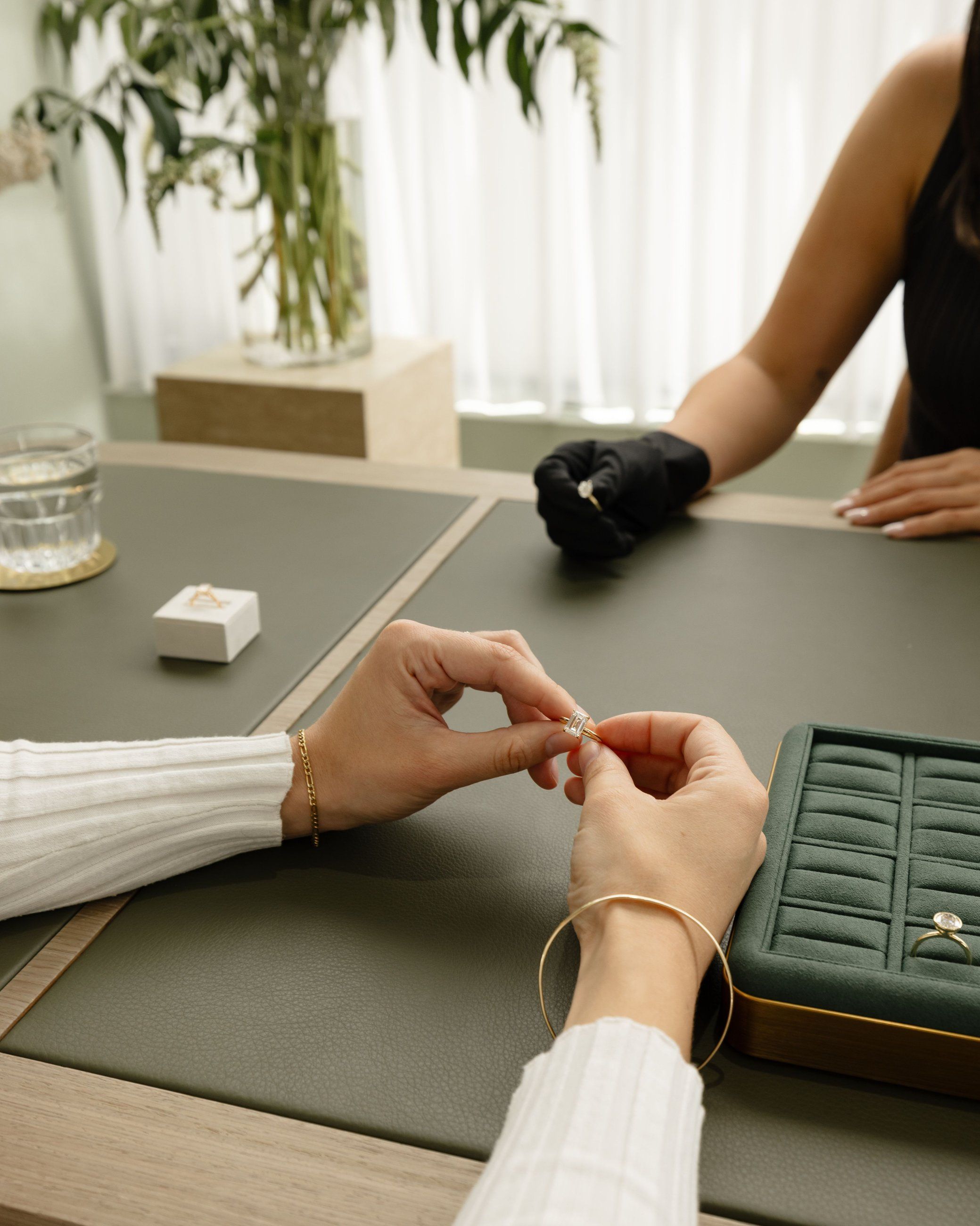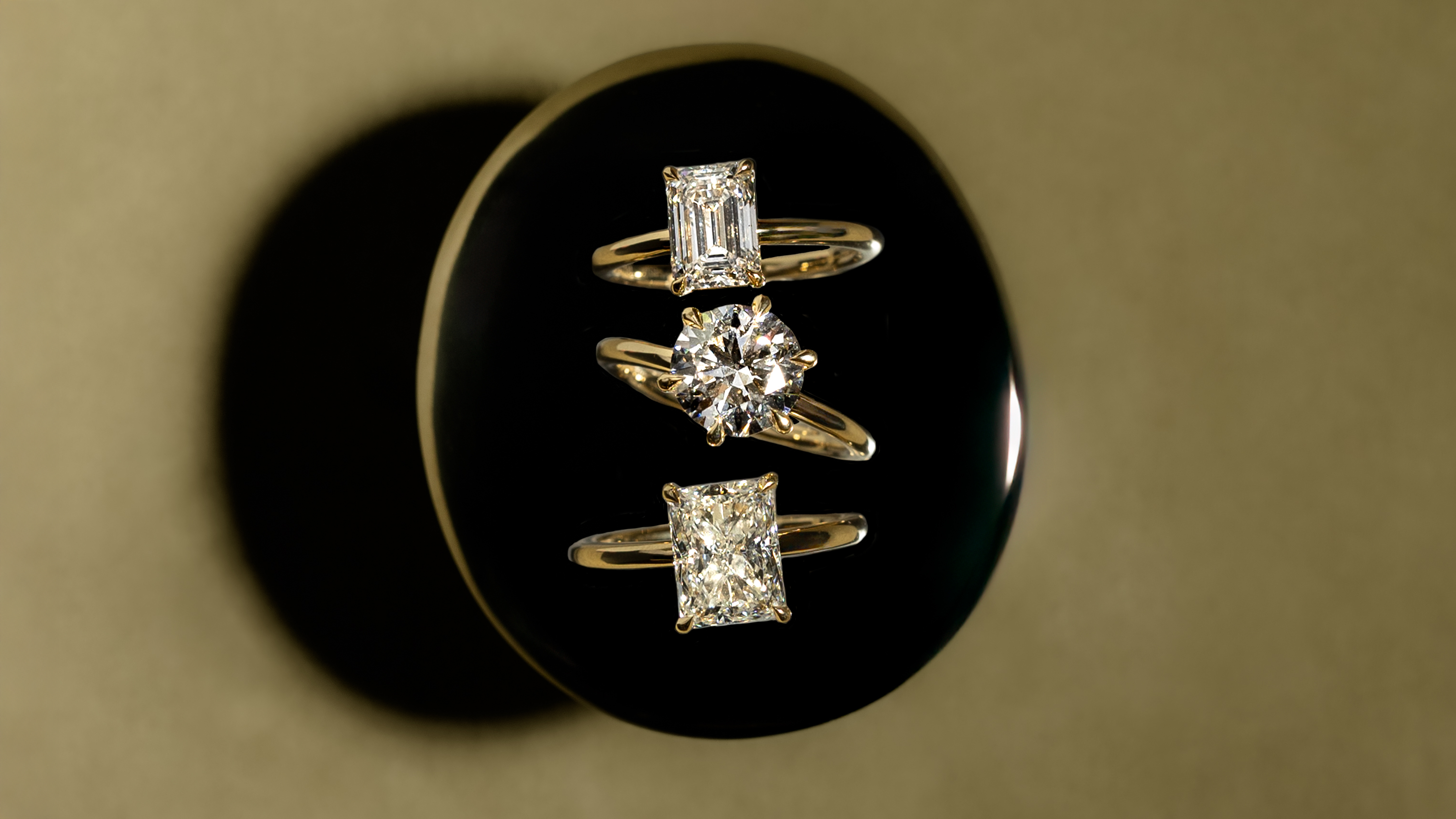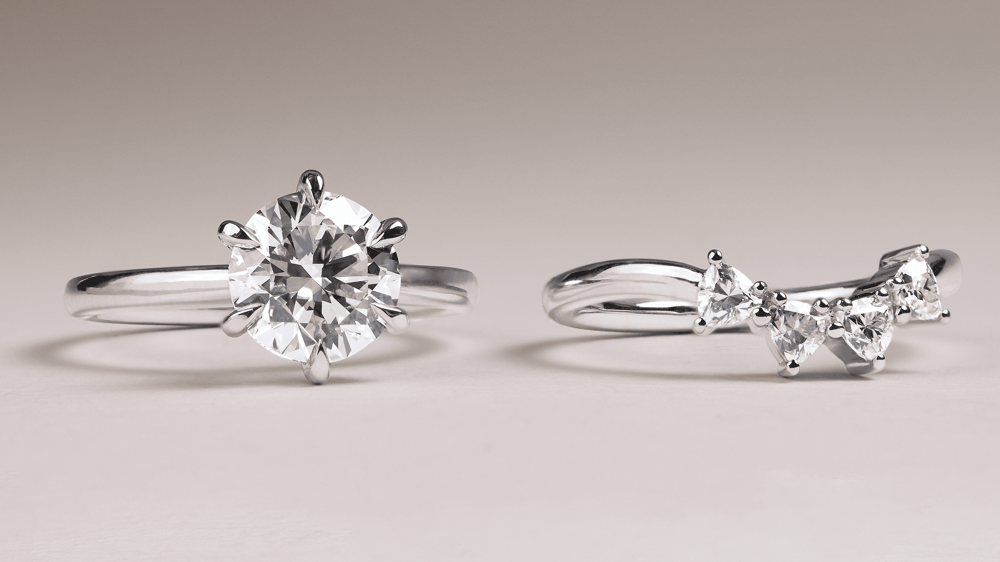
For many couples, an engagement ring is one of the biggest and most meaningful purchases they’ll make, so it’s worth choosing carefully. Beyond deciding between a lab-grown diamond, moissanite, or sapphire, the metal matters too. At Cullen Jewellery, we craft lab-grown diamond, moissanite and sapphire engagement rings, and two of the most popular metal choices are platinum and white gold. Platinum is naturally bright white and highly durable, while white gold is made by mixing yellow gold with white metal alloys, then finishing it with rhodium plating for that crisp white look, which needs re-plating over time. If you’re choosing between the two and want a ring that lasts for life, we recommend platinum. Here are four reasons why:
Purity

While white gold is a trendy choice, platinum has gained popularity due to its purity. Platinum rings are typically made with 95% pure platinum, while 14k white gold rings contain 58% gold and 18k white gold rings contain 75% gold. As a result, platinum rings have a brighter white colour and are less likely to fade over time. Unlike white gold, which can dull over time as the rhodium plating wears away, platinum actually improves with age. It develops a natural patina that gives it a unique look, so your engagement ring will only look more beautiful as time goes on.
Durability
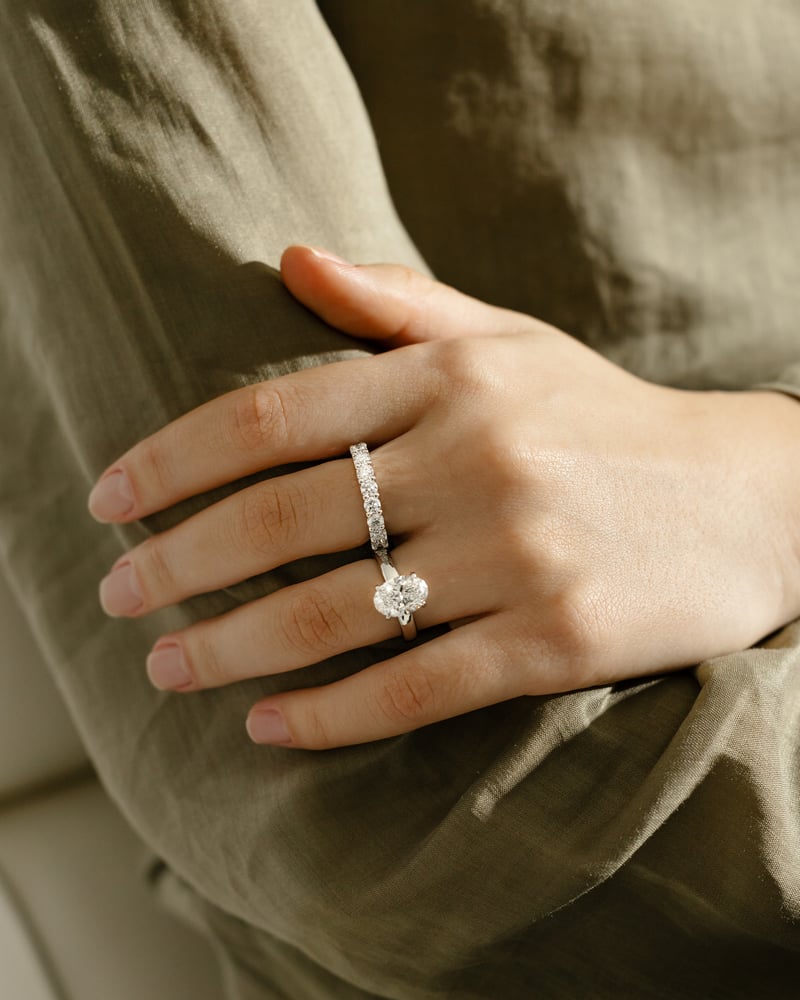

Many people don't realise that platinum is more durable than white gold. White gold is an alloy of gold and other metals, such as silver and palladium. Over time, these metals can wear away, causing the jewellery to lose its lustre. Platinum, on the other hand, is a dense, single-element metal extremely resistant to wear and tear. Platinum also has a higher density than gold, meaning it is less likely to be scratched or dented. Conveniently, because it's so strong, it can more securely hold diamonds and other gemstones in place. As a result, platinum is the perfect choice for those who want their jewellery to stand the test of time.
Hypoallergenic
If you're looking for a hypoallergenic metal for your ring, Platinum is an excellent choice to maximise your comfort. Unlike other metals, platinum is not susceptible to corrosion and is not reactive to body chemistry. As a result, it is much less likely to cause a reaction in people with sensitive skin. Conversely, white gold sometimes contains nickel (at Cullen, all of our metals are nickel-free) and certain trace amounts of impurities that can trigger allergic reactions.
Sustainability


Platinum is often seen as a luxurious metal used in high-end jewellery and watches because it is more exclusive than gold — while around 3,300 tons of gold are mined annually, only 190 tons of platinum are extracted. This makes platinum exceptionally rare, and at an estimated 15–30 times rarer than gold, all the platinum ever mined would fit into an average-sized room. However, platinum has several properties that make it more sustainable than other precious metals. For example, platinum is more durable and scratch-resistant than white gold, meaning that it does not need to be replaced as often. Contrarily, white gold will generally need to be re-plated with rhodium every 1-2 years, depending on lifestyle, to maintain its bright white colour. Platinum is also more resistant to tarnishing, meaning fewer cleaning products and ultrasonic and steam-cleaning machines are required to keep it clean.
As you can see, there are many good reasons to choose platinum over white gold for your lab grown diamond or moissanite engagement ring. Indeed, platinum is more pure, durable, hypoallergenic, and sustainable. Accordingly, platinum is the way to go if you're looking for an engagement ring that will last a lifetime. If you are weighing up between these two metals, book an appointment with us today to discuss platinum as an option for your engagement or wedding ring. View our styles in platinum below and begin your journey.