When choosing a diamond, carat weight often gets the spotlight. Bigger is easily understood, measurable, and reassuring. But weight alone rarely tells the full story. Two diamonds of the same carat can look noticeably different once set – in size, sparkle, and presence. This is where proportions come in. More than weight, proportions determine how a diamond handles light, how large it appears from above, and how alive it feels when worn. Simply put, proportions shape the experience of the diamond.
Why Cut Matters Most

Of the four Cs, cut has the greatest influence on a diamond’s appearance. While the terms Shape and Cut are often used interchangeably, they describe different things. Shape refers to the outline – round, oval, emerald, pear. Cut describes how well the diamond has been proportioned and finished to interact with light. A well-cut diamond reflects light internally and returns it to the eye as brilliance and fire. A poorly cut diamond, even at a higher carat weight, can appear dull or lifeless by comparison. For round brilliant diamonds – the only shape formally graded for cut by both IGI and GIA – cut grades range from Excellent through to Poor. These grades reflect how effectively the diamond’s proportions support light performance, symmetry, and overall balance.
How Proportions Influence Sparkle and Size
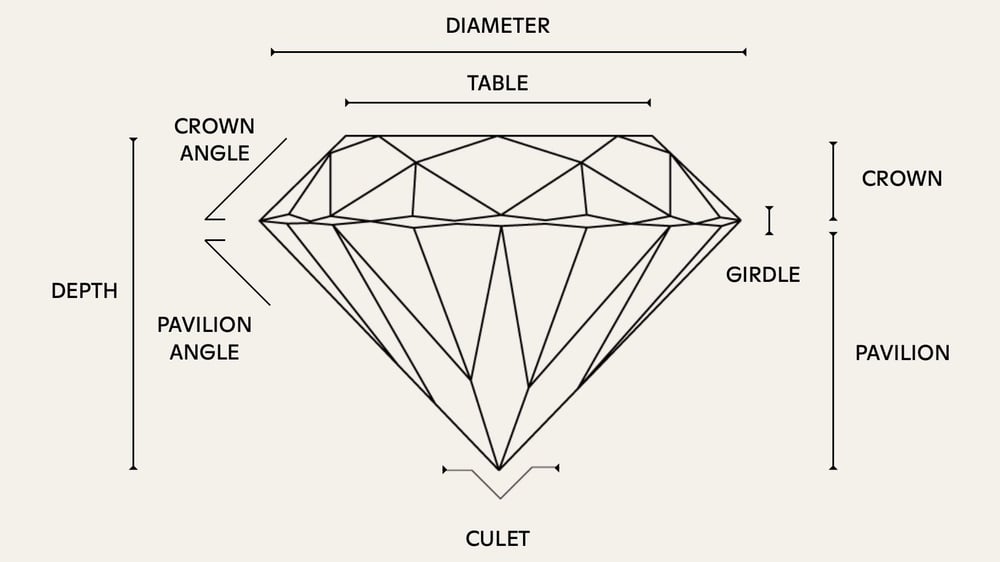
Proportions are the specific measurements of a diamond: depth, table size, angles, and symmetry. Together, they determine how light enters, moves through, and exits the stone. Two diamonds with the same carat weight can have very different face-up sizes depending on these proportions. A diamond cut too deep may carry weight where it isn’t seen, appearing smaller from above. One cut too shallow may leak light, reducing brilliance.
The table is the flat facet on the top of the diamond, and plays a particularly important role. If it’s too small or too large relative to the overall diameter, it can cause light to escape (rather than return to the eye). Well-balanced proportions allow light to reflect internally and exit through the crown, creating the brightness and depth that we’re all after. The crown is the upper portion of the diamond, while the pavilion forms the lower section. Between them sits the girdle – the narrow band that runs around the widest part of the diamond – and at the very base is the culet, the small facet at the tip of the pavilion.
Choosing Well-proportioned Diamonds
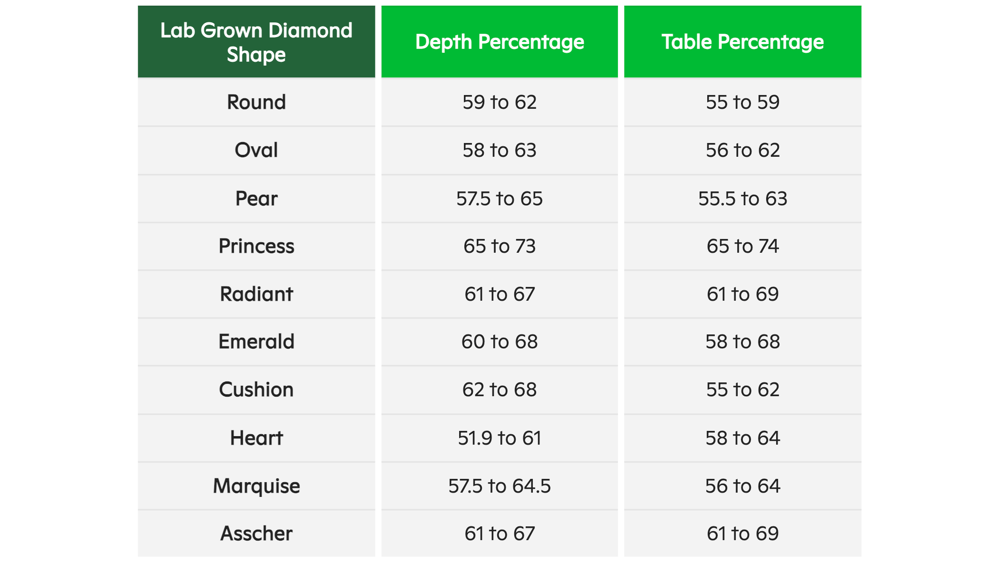
When selecting a diamond, the proportions listed on your IGI or GIA grading report are important indicators of how well the stone will perform. For round brilliant diamonds, an ideal total depth typically falls between 59–62%, while the table percentage is best between 53–60%. The girdle thickness also plays a role. Avoid stones graded extremely thin or extremely thick, as these can affect durability or visual balance. Because ideal proportions vary slightly by shape, it’s helpful to refer to a diamond proportion guide and ensure your stone sits within the ideal or excellent range on its certificate. Understanding these measurements will help you select a diamond that balances beauty, brilliance and performance.
When selecting a lab grown diamond, proportions often tell you far more than carat weight. They speak to how the diamond will look, feel, and perform every day – making them one of the most important considerations in choosing a piece you’ll wear for years to come. At Cullen, this focus on proportion and performance is central to how we select our lab grown diamonds.