The Moval Cut and the Rise of Elongated Diamond Shapes
— by Cullen Jewellery — Reading time 7 minutes
Our design philosophy at Cullen has always started from the same place: what do the people in front of us actually want?
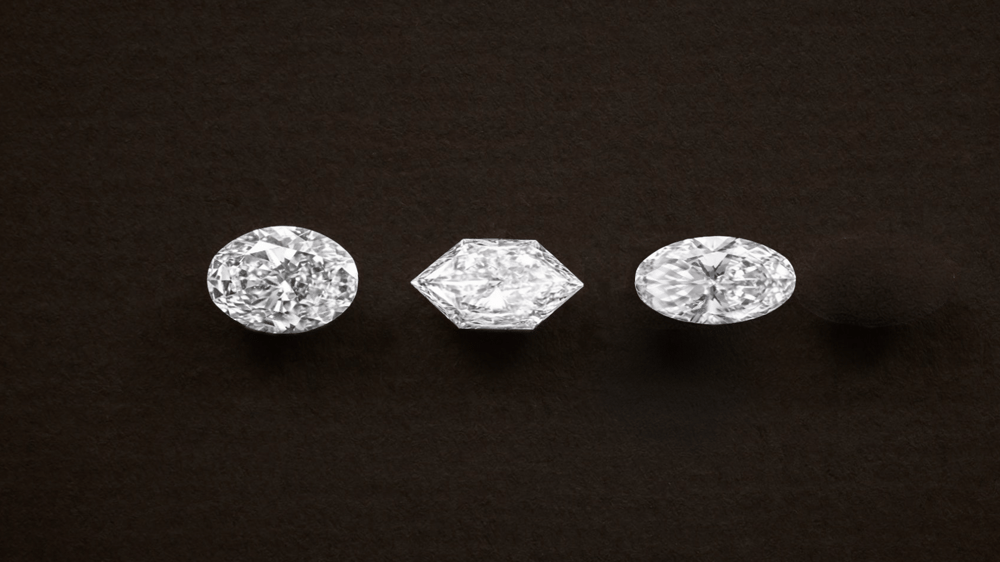
For some, the oval has always been close but not quite right. Too rounded at the ends, or perhaps not enough length, while the marquise feels too sharp and tapered. The moval is the answer to these specific design instincts: an elongated oval diamond with an intentional silhouette, its soft points giving the stone a directional quality that a classic oval does not have.
The addition of the moval to our collection reflects something we’ve always believed: finding the right diamond should be about what you love, not just what’s traditionally available. It joins our range of elongated diamond shapes alongside the oval, marquise, and more architectural cuts, available in our lab-grown diamond collection and certified by the IGI.
Why Elongated Diamond Shapes Flatter the Hand
Before comparing individual cuts, it’s worth understanding why elongated diamond shapes have been trending in engagement jewellery, particularly in 2026.
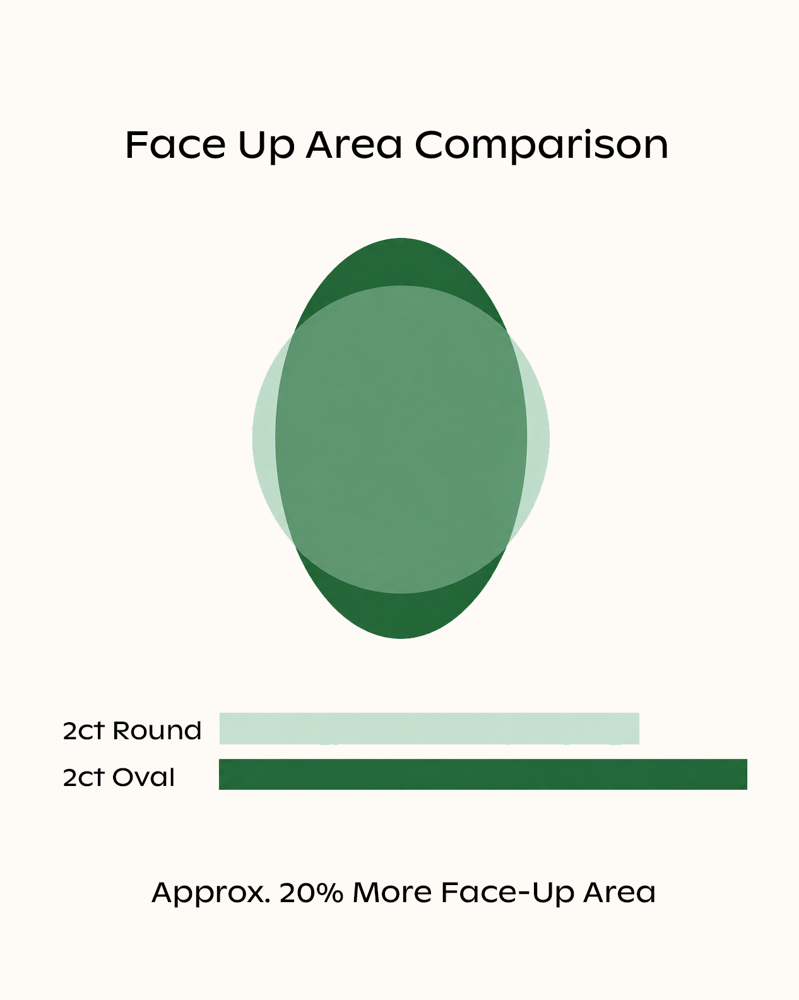
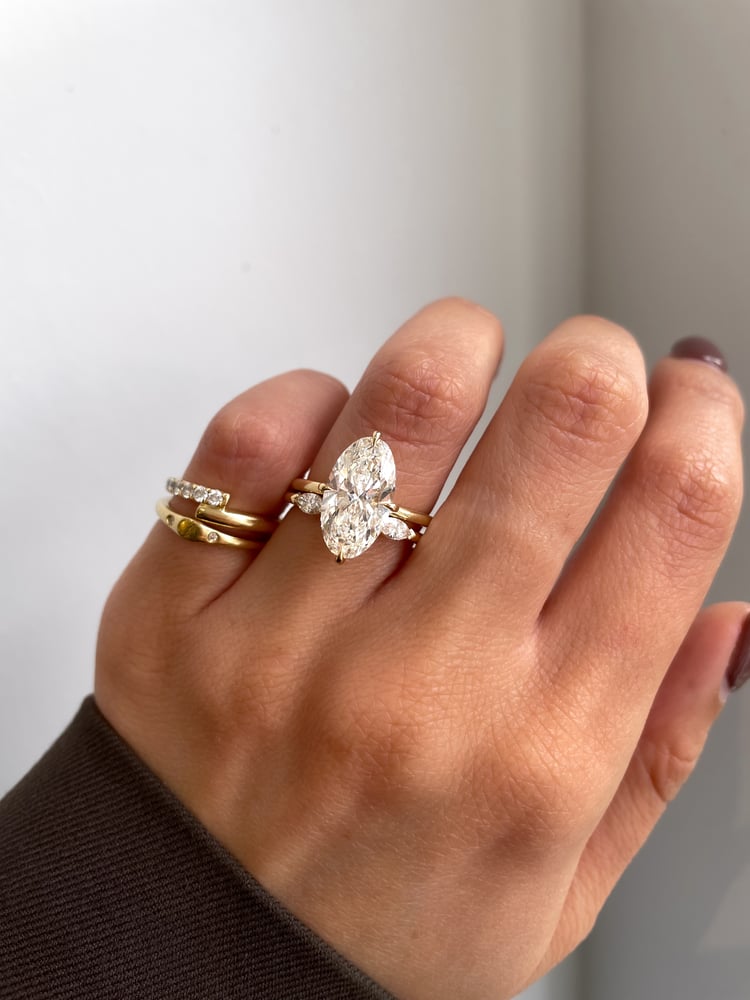
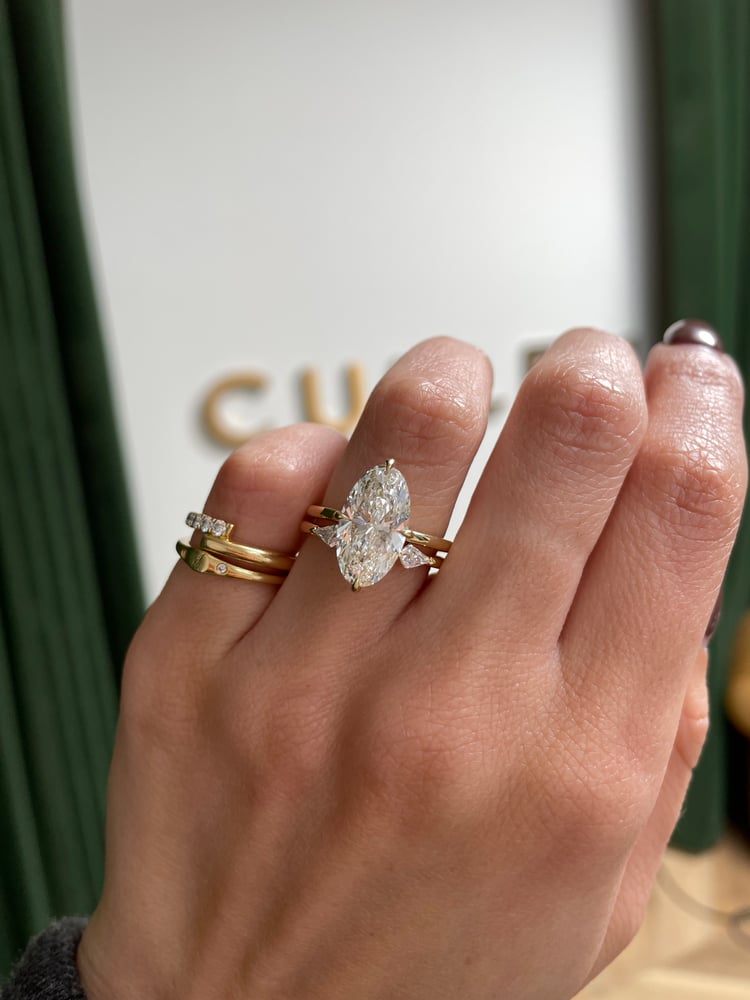
A diamond’s face-up appearance is determined by its surface area and proportions. Two diamonds at the same carat weight can look dramatically different on the hand depending on how they’re cut. Elongated diamonds often appear larger because their weight can be spread across a longer shape rather than concentrated in depth, giving them greater visible surface area. For example, a 1.5 carat moval with a 1.65 length-to-width ratio may have a greater face-up surface area than a 1.5 carat round brilliant of the same weight. Elongated diamonds also follow the natural line of the finger, creating a flattering, lengthening effect that can make fingers appear longer and more slender. This makes them a popular choice when choosing a diamond shape to complement your finger.
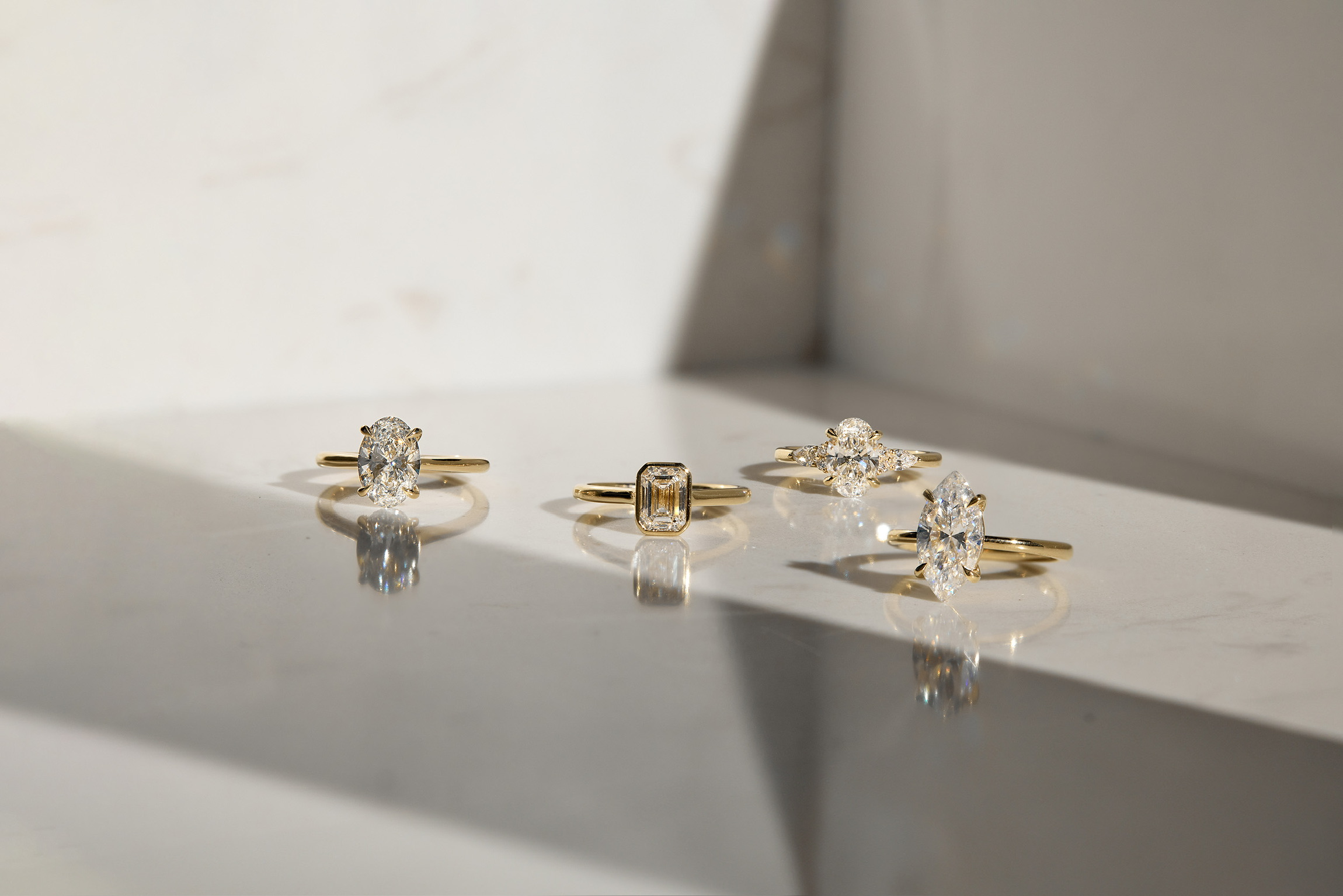
The distinction between the oval, the marquise and the moval is in the ends. The marquise tapers to two sharp points, which gives it a long, narrow, boat-shaped outline and the most dramatic length of the elongated shapes. The moval softens those tips into gentle curves and carries more width through the middle, so it reads as an oval with a refined taper. The points also change how the stone is set: a marquise needs prongs or V-tips to protect them from chipping, while the moval’s rounded ends sit more easily in a setting.
Elongated stones read differently on every hand, and proportions that look right on screen can surprise you in person. The best way to understand what a moval does on your hand against an oval and a marquise is to try them. To try on a moval in person, book a showroom appointment.
The Moval Against Its Neighbours
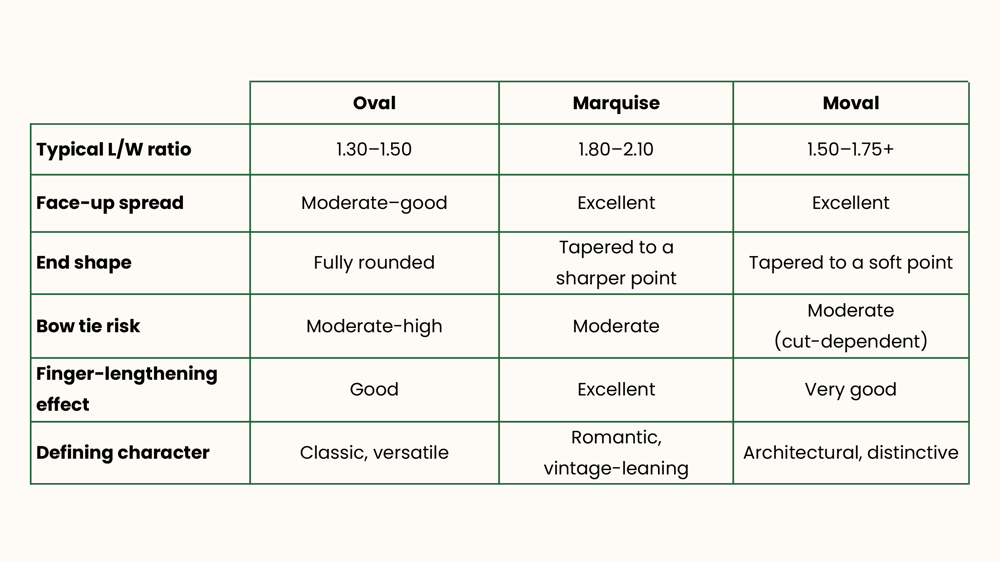
The distinction between the oval, the marquise and the moval is in the ends. The marquise tapers to two sharp points, which gives it a long, narrow, boat-shaped outline and the most dramatic length of the elongated shapes. The moval softens those tips into gentle curves and carries more width through the middle, so it reads as an oval with a refined taper. The points also change how the stone is set: a marquise needs prongs or V-tips to protect them from chipping, while the moval’s rounded ends sit more easily in a setting.
Elongated stones read differently on every hand, and proportions that look right on screen can surprise you in person. The best way to understand what a moval does on your hand against an oval and a marquise is to try them. To try on a moval in person, book a showroom appointment.
The Bow-tie Effect and Elongated Diamonds

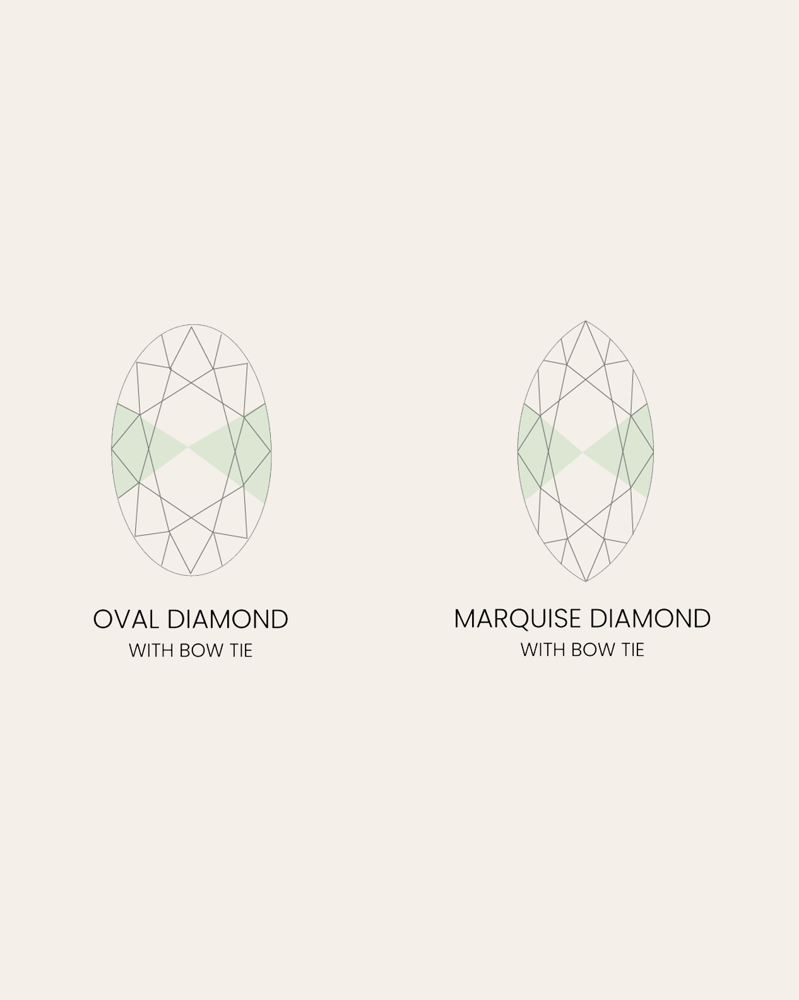
Elongated brilliant-cut diamonds, including ovals, movals, marquises and pear shapes, carry the risk of what’s known as the bow-tie effect: a dark, bow-tie shaped shadow across the centre of the stone.
The effect occurs when certain facets don’t reflect light back to the viewer, creating areas of shadow. While a subtle bow-tie is acceptable in many elongated diamonds, and largely invisible in most lighting conditions, a more pronounced one can affect the stone’s overall appearance. Its visibility depends on the diamond’s cut, proportions and lighting conditions.
At Cullen, we individually assess our moval diamonds for light performance and visible bow ties, helping you find a stone with beautiful, balanced brilliance.
Beyond the Moval: Other Elongated Shapes Worth Knowing
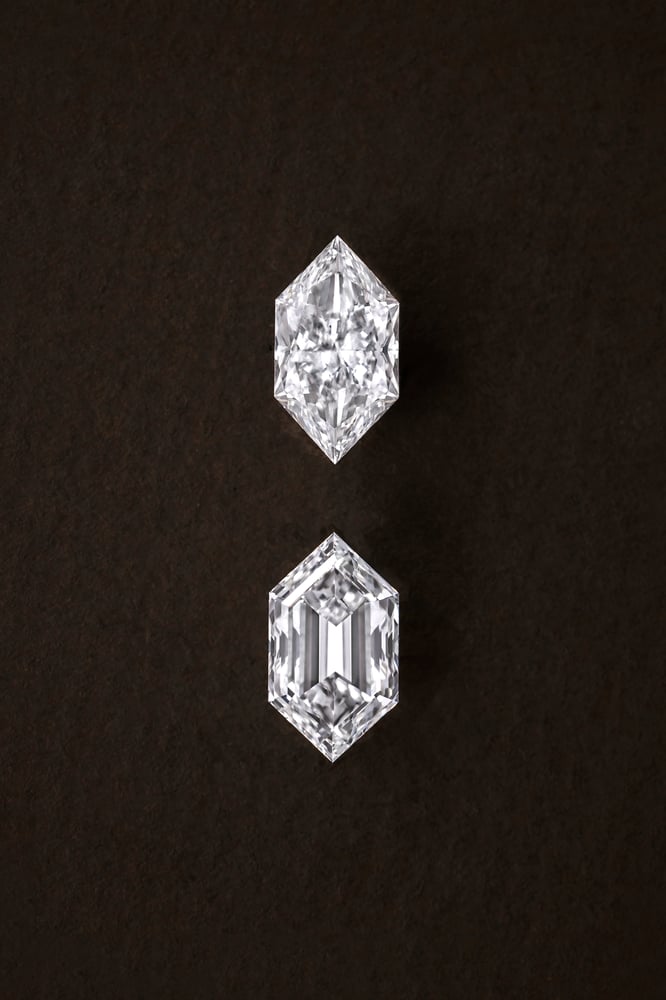
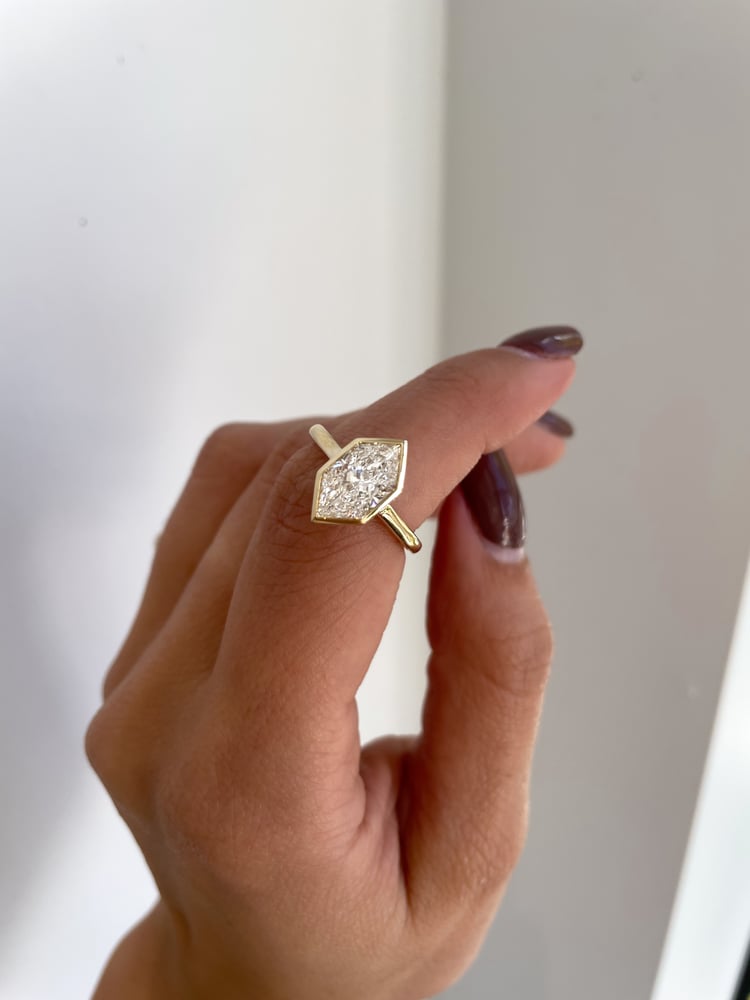
The moval sits within a broader family of elongated shapes, some well-established and some genuinely rare.
The Dutch marquise is a variation on the traditional marquise with a more pronounced curve to its sides and a slightly wider belly. Where a standard marquise is narrow and boat-like, the Dutch Marquise reads more generously. It’s a shape with real architectural quality and one that rewards close attention. If the Dutch marquise feels like your kind of diamond, our team can help you source one.
The elongated hexagon is a more radical departure. A step-cut shape with six flat sides and the long axis of an emerald cut, but without the rectangular symmetry. It has the quality of light of a step-cut (long flashes rather than scattered sparkle) and a silhouette that is genuinely uncommon. It’s not for everyone, but for those drawn to strong geometry, it is a compelling choice.
Both of these sit at the edge of what most jewellers offer. At Cullen, access to a broad stone inventory means the design doesn’t have to stop at the most common options.
Setting and Band Considerations for the Moval
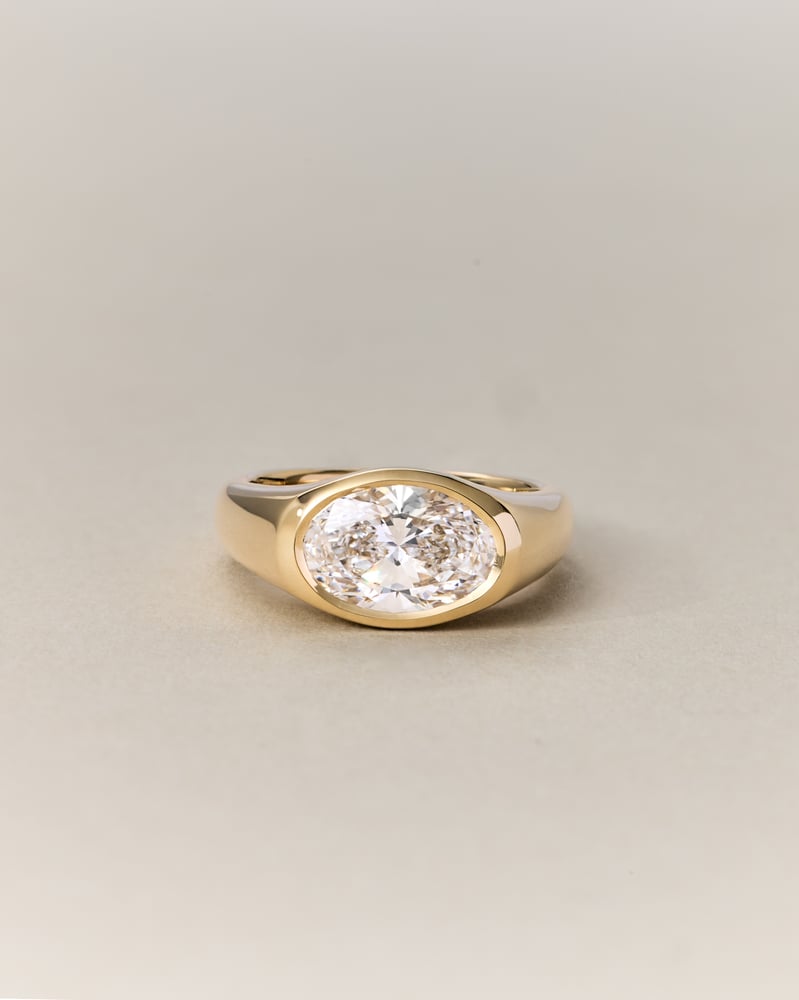
The moval’s tapered ends create a specific design constraint that’s worth understanding before choosing a setting.
The soft points of the moval are the most vulnerable part of the stone. They are thinner at the tip than the stone’s centre, and are exposed to knocks in a way that fully rounded ovals aren’t. The setting must account for this. The most secure and visually fitting options are V-prongs or eagle-tipped claws that wrap around or cradle each pointed end, holding them without covering too much of the stone. A standard four-claw round prong setting placed at the tips of a moval will not grip adequately and may allow the stone to shift over time.
A bezel setting (a rim of metal surrounding the stone’s full outline), as seen in our Armani or Stella rings, protects the ends completely and would give a moval a clean, modern appearance. It’s an excellent choice for those with active lifestyles, and it emphasises the shape’s elongated silhouette particularly well.
Band choice matters too. Because the moval’s ends taper, there is a natural gap where the stone meets the band – the curved underside of the stone does not sit flush against a straight band edge the way a cushion or round might. A cathedral or gallery setting that bridges this gap elegantly, or a design that incorporates the open space as part of the ring’s architecture rather than fighting against it, will produce the most resolved result. Our team works through these considerations with every client.
Design Your Moval Engagement Ring With Us
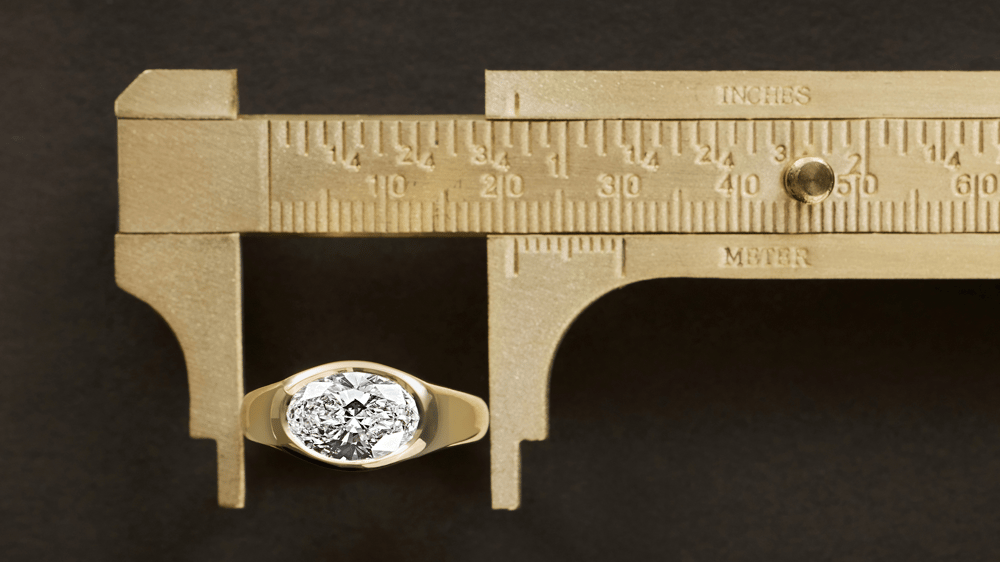
The moval is available as a custom piece, designed one-on-one with our client advisors. Our team can walk you through stone selection and design a setting that’s built around your specific stone for something truly one-of-a-kind.
The moval is a shape that deserves to be seen in person, discussed with someone who understands how its proportions will perform on your hand, and set in a way that brings your vision to life. To start the conversation, book an appointment in a showroom or virtually.


FAQs
Your questions, answered.
A moval is a hybrid diamond shape that combines the elongated body and brilliant-cut faceting of an oval with the softly tapered ends of a marquise. The name combines the two parent shapes: marquise and oval. It sits between a fully rounded oval and a pointed marquise for a softer aesthetic.
‘Moval’ is a portmanteau: marquise plus oval. The name is descriptive – it tells you exactly what the shape is. It is not an officially recognised gemological classification, so it will not appear on a laboratory grading report by that name. The report will describe the stone’s geometry; the name is a trade convention that the industry has adopted to distinguish very elongated oval-marquise hybrids from standard ovals.
A bow tie is a dark, bow-tie-shaped shadow that appears across the centre of an elongated brilliant-cut stone. It is caused by light passing through the stone's pavilion facets at angles that do not return light to the viewer’s eye. In a well-cut elongated stone, the cutter has balanced the pavilion angles to minimise this effect. In a poorly cut stone, the bow tie is dark and visible in all lighting conditions. Every elongated shape carries the risk; cut quality is what controls it.
Face-up surface area, the amount of the stone visible when looking directly at it, is the meaningful measure, not carat weight alone. Elongated shapes at a high length-to-width ratio spread their weight across length rather than depth, and typically show more face-up area per carat than a round brilliant. The moval, particularly at ratios above 1.60, delivers excellent face-up presence for its weight. An elongated oval and the marquise perform similarly.
There is no single correct answer, because diamond proportion decisions belong to the wearer’s preference, not to a rule about what the hand size requires. That said, elongated shapes like oval, moval and elongated cushion align with the natural axis of the finger and trace its line in a way that is typically very flattering. They read as part of the finger rather than sitting across it. The moval’s higher length-to-width ratio makes it particularly suited to those who want strong elongation. The best shape is the one that the wearer chooses with full understanding of the options, which is exactly what a design session at Cullen is designed to produce.