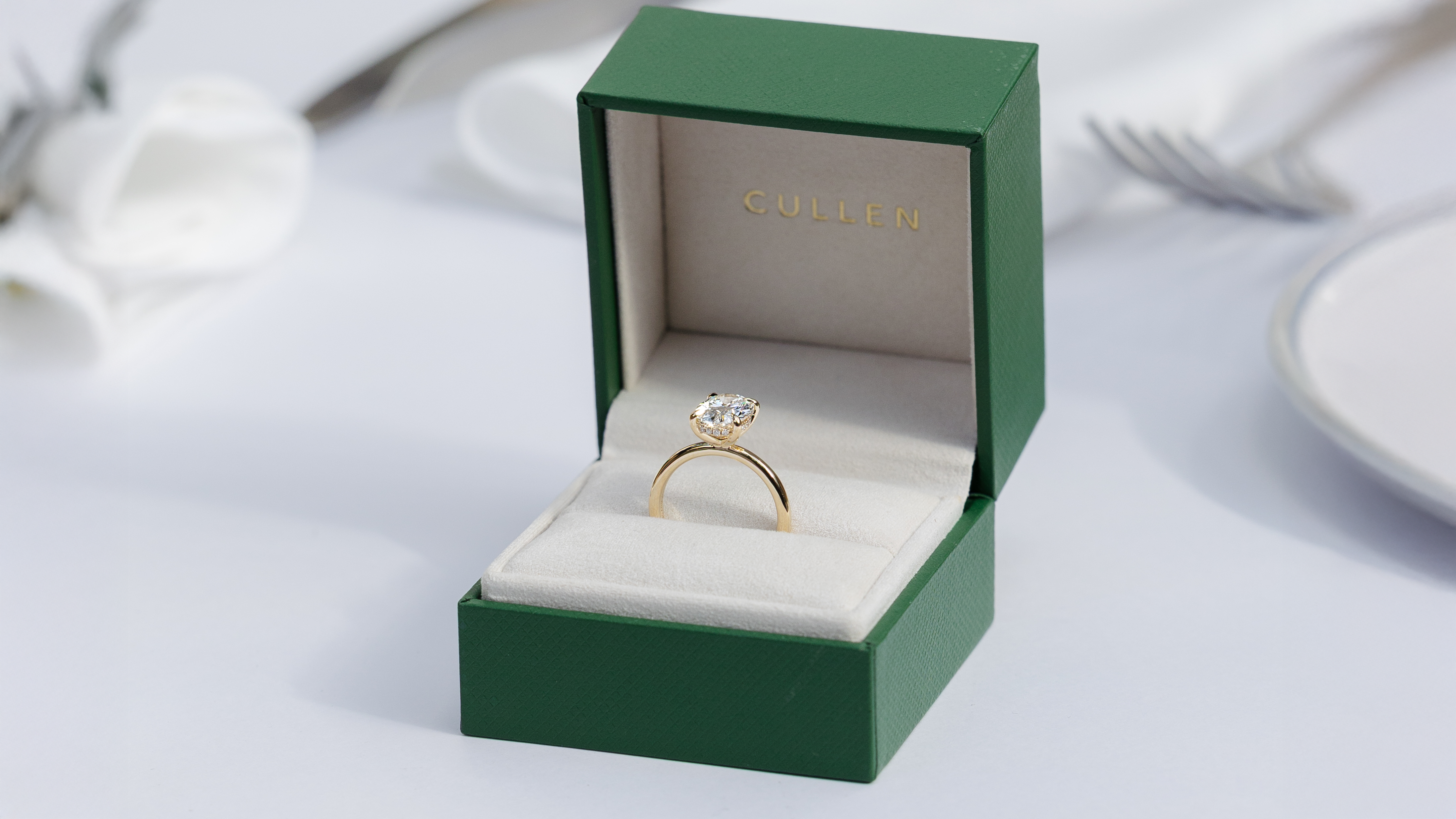
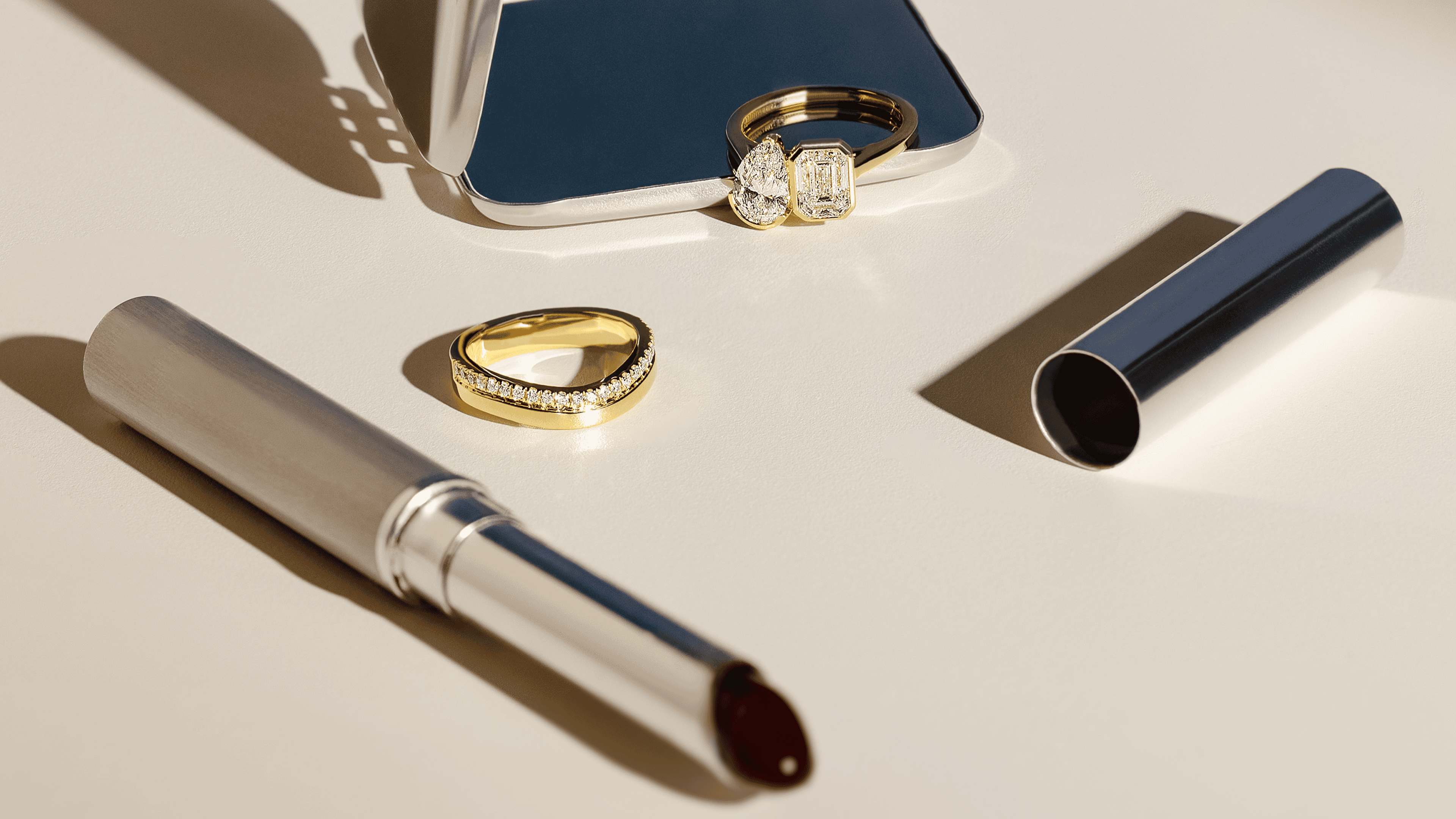
Your engagement ring and/or wedding band is the one piece of jewellery you will wear every single day. And much like the relationships they represent, a ring that doesn’t fit well can just feel wrong. It can cause real problems, and those problems compound the longer the fit goes unaddressed. Understand when and how to resize your ring – and what to expect from the process with this handy guide.
What is Ring Resizing and How Does It Work?


Ring resizing is the process of adjusting a ring's band to make it larger or smaller for a comfortable, secure fit. A jeweller assesses the design, metal, and gemstone settings first, then decides how much the ring can change.
For a typical resize, the jeweller cuts a small section at the base of the band. To make the ring larger, they add a section of metal; to make it smaller, they remove a section. The jeweller then joins the ends and shapes and finishes the band to restore its appearance.
The joining method depends on the metal and design. While traditionally a lot of jewellers will use soldering to rejoin the band back together, our jewellers use laser welding for an unmatched degree of precision, resulting in a seamless join which is just as strong as the original ring
How Should a Ring Fit Before You Consider Resizing?


A well-fitting ring should slide over your knuckle with gentle pressure and offer some resistance when you remove it. It should feel comfortable at the base of your finger without being loose enough to slip off during everyday wear.
Ring sizing can be difficult because your ring may not feel the same every day. Temperature changes affect finger size: a band can feel snugger in warm weather and looser when your hands are cold. Changes in your hands over time can also affect a fit that once felt right.
Before arranging a resize, notice how your ring feels over several days instead of judging it from one moment. If it feels too tight or too loose most of the time, a professional fitting can help you find the right size. Our team can check how the band passes over your knuckle and sits on your finger, and help you choose a fit that feels comfortable and secure.
What Happens If You Don't Resize a Ring That Doesn't Fit?


You might put off resizing when a ring is only slightly off, but a poorly fitting ring causes real problems.
A tight ring is difficult to put on and remove over the knuckle, and it can restrict blood circulation, especially during warmer months when fingers swell. It also raises the risk of skin irritation: metal pressing against the skin lets oils, lotion, conditioner, and dust build up at that contact point, causing dark smudging or ongoing irritation. Over time, a ring that stays too tight can warp to the finger's contours, losing its circular shape and becoming misshapen.
A ring that's too loose creates different problems. It can spin on the finger, which stands out if the ring has a larger centre stone that rotates away from where it should sit. A loose ring is also more vulnerable to knocks, since it shifts instead of staying in place. Without warning, it can slip off entirely: in cold weather when fingers contract, during washing up, or when reaching into a bag.
When is the Best Time to Resize Your Ring?


Finger size isn't fixed for life. Weight fluctuation, age, and changes in muscle tone all affect the size of your fingers. Sometimes the change happens over months, and you don't notice until the ring feels wrong.
Pregnancy is often the exception: fingers can swell almost overnight. After birth, size returns to its pre-pregnancy baseline, though not always right away. Rather than forcing a ring onto a swollen finger, resizing it or setting it aside for a while are both reasonable options.
Many people wait until after pregnancy to see if their fingers return to their normal size. It's worth waiting a few months to see if your fingers have changed size, since resizing takes your ring out of use for a couple of weeks and is a labour-intensive process.
Which Rings Can Be Resized, and by How Much?


Many gold and platinum rings can be resized, but the available range depends on the design. Plain bands allow more flexibility than bands with closely set gemstones, where changing the curve can affect the settings.
Pavé and accent designs have smaller resize ranges because resizing changes the band's curve, which can affect how the gemstones sit in their settings. For example, our Joanna pavé wedding ring has a resizing range of 2.5 sizes up or 2 sizes down. These ranges can vary depending on the size and amount of pave or accent stones and how far they wrap around the band. For every Cullen jewellery ring, the resize range can be found on its individual product page.
Full eternity rings, with gemstones around the entire band, have no plain section to cut without disturbing the settings, which rules out conventional resizing. Opting for a 2/3 pavé is a great option because it creates the illusion of stones all the way around the band while giving you a little wiggle room to resize the ring. Before you buy or resize a ring, it is always worth checking its product information and asking our friendly team to confirm the available range for your design and metal.
How Do You Arrange a Ring Resize With Cullen Jewellery?

We want every Cullen ring to fit perfectly from the start, and we stand behind that with our resize policy. We offer one complimentary resize within 12 months of your ring's completion for eligible engagement and wedding rings, subject to design and metal restrictions. To arrange a ring resize with Cullen Jewellery, visit a showroom so our team can assess your fit and ring design first. This fitting confirms your requested size and whether the adjustment suits your ring.
Resizing takes 2 to 4 business weeks from when we receive your ring. Check eligibility and the full terms in our free resizing policy.
If you cannot visit a showroom, contact our team to arrange returning your ring by post. Confirm the requested size before sending it, especially if the fit varies throughout the day. Let the team know if your ring has been resized before, as this can affect the scope for further adjustments and may require a workshop assessment. Any resizing beyond the 12-month window, or after the complimentary resize has been used, will incur a fee.
Summary
The simplest and most accurate route is getting your ring size checked in person by a jeweller, where you can have your finger measured precisely and ensure the resize request is exactly right. If you have any questions about sizing, fit, or resizing your Cullen ring, our team is available online, by phone, or in person at our showrooms. Get in touch here.